Navigating Your Health: How to Slash Your Prescription Costs 2026 with State Programs
The rising cost of prescription medications is a persistent concern for millions of Americans. As we look ahead to 2026, many are already wondering how they can manage their healthcare expenses, particularly when it comes to essential drugs. The good news is that there are powerful resources available: State Pharmaceutical Assistance Programs (SPAPs). These programs are designed to help eligible individuals and families significantly reduce their prescription costs 2026, ensuring access to vital medications without financial strain. This comprehensive guide will delve into what SPAPs are, who qualifies, how to apply, and strategic tips to maximize your savings in the coming years.
Anúncios
Understanding the Landscape of Prescription Costs 2026
Before diving into solutions, it’s crucial to understand why prescription costs 2026 remain a significant challenge. Several factors contribute to the high price of medications in the United States. These include the complex drug development process, patent protections that grant manufacturers exclusivity, lack of price negotiation power for certain payers, and the intricate supply chain. For many, a single prescription can represent a substantial portion of their monthly budget, leading to difficult choices between medication adherence and other necessities. The anticipation of 2026 brings with it the ongoing need for proactive financial planning and awareness of available assistance.
While federal programs like Medicare Part D offer some relief, they often come with deductibles, co-pays, and coverage gaps that can still leave beneficiaries with considerable out-of-pocket expenses. This is where SPAPs become invaluable, acting as a crucial safety net for those who need additional support. They are often designed to complement existing insurance plans, filling in the gaps and making medications truly affordable. Understanding these dynamics is the first step toward effectively managing your prescription costs 2026.
Anúncios
What Are State Pharmaceutical Assistance Programs (SPAPs)?
State Pharmaceutical Assistance Programs (SPAPs) are state-funded initiatives designed to help residents afford their prescription medications. While the specifics vary from state to state, the overarching goal is to reduce the financial burden of drug costs for eligible individuals, particularly seniors, people with disabilities, and low-income families. These programs can provide assistance in various forms, including:
- Direct Financial Assistance: Some SPAPs directly pay a portion or all of a prescription’s cost.
- Premium Assistance: Certain programs help beneficiaries pay their Medicare Part D premiums.
- Deductible and Co-pay Assistance: Many SPAPs cover or reduce the deductibles, co-payments, and co-insurance associated with Medicare Part D or other insurance plans.
- Coverage Gap (Donut Hole) Relief: A significant benefit for Medicare Part D enrollees, SPAPs can help cover costs during the dreaded coverage gap, where out-of-pocket expenses typically increase significantly.
- Drug Discount Cards: Some states offer discount cards that provide reduced prices on a wide range of medications.
The existence of these diverse benefits highlights their critical role in mitigating the impact of high prescription costs 2026. Each state tailors its program to meet the unique needs of its population, meaning that what’s available in one state might differ significantly from another. This necessitates a localized approach when researching and applying for assistance.
Who Qualifies for SPAPs in 2026? Eligibility Criteria Explained
Eligibility for SPAPs is determined by a combination of factors, which are set by individual states. While specific criteria will vary, common requirements generally include:
- Residency: Applicants must be legal residents of the state offering the program.
- Age or Disability Status: Many SPAPs are primarily geared towards seniors (e.g., age 65 and older) and individuals with qualifying disabilities.
- Income Limits: This is often the most significant factor. States establish specific income thresholds (e.g., a percentage of the Federal Poverty Level) that applicants must meet to qualify. These limits can vary based on household size.
- Asset Limits: Some programs also consider an applicant’s assets (e.g., savings accounts, investments, real estate beyond their primary residence). However, many SPAPs have more generous asset limits than other government assistance programs, or no asset limits at all.
- Insurance Status: While SPAPs often complement Medicare Part D, some programs may have specific requirements regarding whether an applicant has other prescription drug coverage. For instance, some may require you to be enrolled in Medicare Part D, while others might provide assistance if you have no coverage.
It’s vital to check the specific requirements for your state’s program, as these can be updated periodically, including for prescription costs 2026. Even if you didn’t qualify in the past, changes in your financial situation or program updates might make you eligible now. Don’t assume you won’t qualify without thoroughly investigating your state’s current guidelines.
How to Find Your State’s Pharmaceutical Assistance Program
The first step to reducing your prescription costs 2026 through SPAPs is to identify what programs are available in your state. Here’s how you can do it:
- State Government Websites: The official website of your state’s Department of Health, Department of Social Services, or Office for the Aging is often the best place to start. Look for sections related to prescription assistance, senior benefits, or healthcare programs.
- National Council on Aging (NCOA): The NCOA website provides a comprehensive BenefitsCheckUp® tool that can help you find various benefits, including SPAPs, based on your location and circumstances.
- Medicare Website: The official Medicare site (Medicare.gov) has resources that can link you to state-specific assistance programs, especially those that coordinate with Medicare Part D.
- Local Agencies: Your local Area Agency on Aging (AAA), senior centers, or community health clinics often have counselors who can provide information and assistance with applications.
- Pharmacists: Sometimes, your local pharmacist might be aware of state or local programs that can help you manage your prescription costs 2026.
Once you locate your state’s program, carefully review its website for detailed information on eligibility, benefits, and the application process. Many states have dedicated phone lines or helplines for their SPAPs, providing direct access to knowledgeable staff who can answer your questions.
The Application Process: Steps to Secure Lower Prescription Costs 2026
Applying for a SPAP typically involves several steps. While the exact process will vary by state, here’s a general outline:
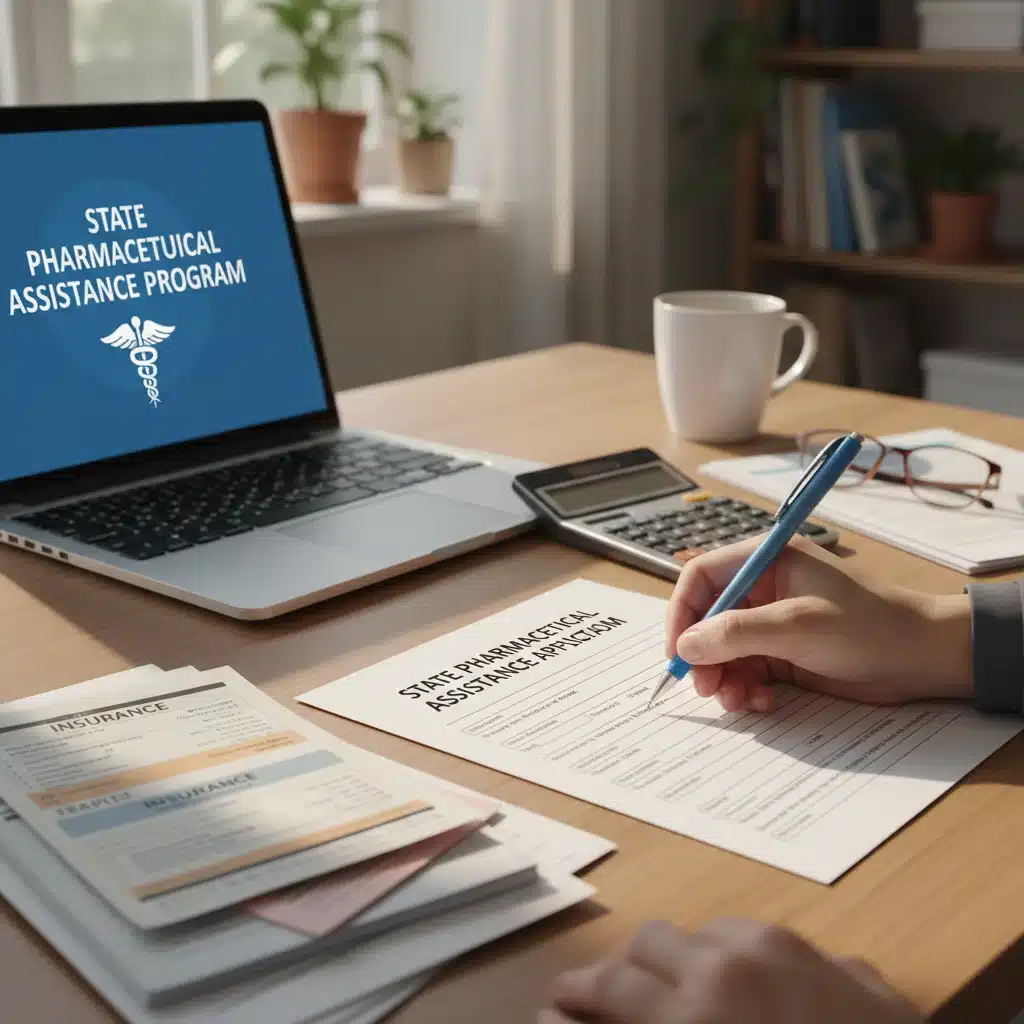
- Gather Required Documents: You’ll likely need to provide proof of residency (e.g., driver’s license, utility bill), income (e.g., tax returns, pay stubs, Social Security benefit statements), assets (e.g., bank statements), and health insurance information (e.g., Medicare card, insurance policy numbers). Having these documents organized beforehand will streamline the process.
- Complete the Application Form: Most states offer online applications, downloadable forms, or the option to request a form by mail. Fill out the application accurately and completely. Incomplete applications are a common cause of delays.
- Submit the Application: Follow the instructions for submission – whether it’s online, by mail, or in person. Keep copies of everything you submit for your records.
- Await Notification: After submitting your application, there will be a review period. You will typically receive a notification by mail regarding your eligibility status.
- Appeal if Necessary: If your application is denied, don’t give up immediately. Review the denial letter carefully to understand the reason. Many programs have an appeal process, and you may be able to provide additional information or clarify details to overturn the decision.
Remember that assistance is available if you find the application process overwhelming. Local senior centers, community organizations, or even your healthcare provider’s office may offer help with completing forms and navigating the system to reduce your prescription costs 2026.
Maximizing Your Savings: Tips for Managing Prescription Costs 2026
Beyond SPAPs, several strategies can help you further reduce your prescription costs 2026:
- Generic Medications: Always ask your doctor if a generic version of your prescribed medication is available. Generics are chemically identical to brand-name drugs but are often significantly cheaper.
- Talk to Your Doctor: Discuss your financial concerns with your physician. They might be able to prescribe a less expensive alternative, a lower dosage that can be split (if appropriate and safe), or samples.
- Compare Pharmacy Prices: Prices for the same medication can vary widely between pharmacies. Use online tools, apps, or simply call around to compare prices. Warehouse clubs and larger retail pharmacies sometimes offer better deals.
- Patient Assistance Programs (PAPs): Many pharmaceutical manufacturers offer their own Patient Assistance Programs. These are distinct from SPAPs and are designed to provide free or low-cost medications to uninsured or underinsured individuals who meet specific income criteria.
- Discount Cards: Beyond state programs, several private organizations offer prescription discount cards that can provide significant savings, especially if you’re uninsured or your insurance doesn’t cover a particular drug.
- Mail-Order Pharmacies: For maintenance medications, mail-order pharmacies often offer lower prices and convenient delivery, sometimes for a 90-day supply at a reduced rate compared to monthly fills.
- Check for 340B Programs: Some hospitals and clinics participate in the 340B drug pricing program, which allows them to purchase outpatient drugs at significantly reduced prices. If you receive care at one of these facilities, ask if you can fill your prescriptions there.
- Review Your Insurance Plan Annually: During the open enrollment period (especially for Medicare Part D), review your current plan and compare it with others. Plans change annually, and a different plan might offer better coverage for your specific medications, thereby lowering your overall prescription costs 2026.
Combining these strategies with SPAP benefits can create a robust plan to manage and drastically reduce your prescription costs 2026.
The Future of Prescription Costs 2026 and Beyond
The landscape of prescription drug pricing is constantly evolving. Legislative efforts at both federal and state levels are continuously being debated and implemented to address the issue of high drug costs. For example, recent federal legislation has introduced provisions allowing Medicare to negotiate drug prices for certain medications, which could have a ripple effect on overall drug pricing over time. While the full impact of such changes may not be immediately felt, they signal a growing commitment to making medications more affordable. However, these changes will be phased in, making the immediate availability of SPAPs and other assistance programs even more critical for managing prescription costs 2026.
Staying informed about these legislative developments can also help you anticipate future changes to your medication expenses. Advocacy groups and government health agencies often provide updates on new programs or reforms that could benefit you. Proactive engagement and awareness are key to navigating this complex system effectively.
Case Studies: Real-Life Impact of SPAPs on Prescription Costs 2026 (Hypothetical Examples)
To illustrate the tangible benefits of SPAPs, let’s consider a few hypothetical scenarios:
Maria’s Story: Bridging the Medicare Part D Gap
Maria, a 72-year-old widow living in a state with an active SPAP, relies on several expensive medications for chronic conditions. In 2025, she hit the Medicare Part D ‘donut hole,’ leading to thousands of dollars in out-of-pocket expenses. For prescription costs 2026, Maria applied for her state’s SPAP. The program qualified her for assistance that covers a significant portion of her medication costs during the coverage gap. This meant that instead of paying hundreds of dollars each month, her out-of-pocket expenses were reduced to a manageable co-pay, allowing her to stay adherent to her vital prescriptions without sacrificing other living expenses.
David’s Experience: Low Income, High Needs
David, 58, works part-time and has limited income. He was diagnosed with a condition requiring a brand-name medication that costs over $500 a month. Even with his basic health insurance, the co-pay was prohibitive. His state’s SPAP, designed for low-income residents regardless of age, stepped in. The program not only covered a substantial part of his monthly co-pay but also helped him access a special discount for a 90-day supply, further lowering his prescription costs 2026. This enabled David to consistently take his medication, improving his quality of life and preventing more severe health complications.
The Johnson Family: Managing a Child’s Chronic Illness
The Johnson family has a child with a rare chronic illness requiring specialized, high-cost medication. While they have employer-sponsored insurance, the annual deductible and ongoing co-insurance were a major financial strain. Their state’s SPAP for families with children facing high medical costs provided supplemental coverage, reducing their monthly out-of-pocket burden by over 70%. This allowed them to manage their child’s prescription costs 2026 without depleting their savings or going into debt, demonstrating that SPAPs aren’t just for seniors.
These examples underscore the diverse ways SPAPs can provide critical financial relief and improve health outcomes by making medications affordable.
Common Misconceptions About SPAPs
Despite their benefits, several misconceptions often deter individuals from exploring SPAPs:
- “I make too much money to qualify.” Income limits vary widely. Some programs have surprisingly generous thresholds, especially for individuals with high medical expenses. Always check your state’s specific criteria.
- “It’s too complicated to apply.” While applications require documentation, many states and local organizations offer assistance. The effort invested can yield significant savings on your prescription costs 2026.
- “These programs only cover generic drugs.” Many SPAPs cover both generic and brand-name medications, especially if a generic alternative isn’t available or medically appropriate.
- “I have Medicare Part D, so I don’t need a SPAP.” On the contrary, many SPAPs are specifically designed to work in conjunction with Medicare Part D, helping with premiums, deductibles, co-pays, and the dreaded coverage gap. They can greatly reduce your overall prescription costs 2026 even with Part D.
- “My state doesn’t have one.” While not every state has a comprehensive SPAP, many offer some form of prescription assistance or drug discount program. It’s always worth investigating.
Don’t let these misconceptions prevent you from seeking out valuable assistance. A quick inquiry could save you thousands on your prescription costs 2026.
Preparing for Prescription Costs 2026: A Proactive Approach
As 2026 approaches, taking a proactive stance on your medication expenses is crucial. Here’s a checklist to help you prepare:
- Review Your Current Medication List: Understand exactly what medications you take, their dosages, and their current costs.
- Assess Your Financial Situation: Know your income and assets to determine potential eligibility for various assistance programs.
- Research Your State’s SPAP: Begin researching your state’s specific program, including its eligibility requirements and application deadlines for the upcoming year.
- Consult with Healthcare Professionals: Talk to your doctor or pharmacist about potential lower-cost alternatives or ways to optimize your prescriptions.
- Explore All Assistance Avenues: Don’t just rely on one source. Investigate SPAPs, PAPs, discount cards, and pharmacy comparison tools.
- Stay Informed: Keep abreast of changes in healthcare policy, insurance plans, and assistance programs that could impact your prescription costs 2026.
By taking these steps, you empower yourself to make informed decisions and secure the financial relief you need for your healthcare.
Conclusion: Empowering You to Manage Prescription Costs 2026
Managing prescription costs 2026 doesn’t have to be an insurmountable challenge. State Pharmaceutical Assistance Programs (SPAPs) offer a vital lifeline for countless individuals and families, providing significant financial relief and ensuring continued access to necessary medications. By understanding what these programs are, who qualifies, and how to navigate the application process, you can unlock substantial savings. Coupled with other smart strategies like opting for generics, comparing pharmacy prices, and utilizing patient assistance programs, you can build a comprehensive plan to keep your medication expenses manageable.
Don’t let the fear of high drug prices compromise your health. Take the initiative to explore the resources available to you. A little research and effort now can lead to substantial peace of mind and better health outcomes for prescription costs 2026 and beyond. Your health and financial well-being are too important to leave to chance.