Beyond the Brochure: Debunking Myths About Regional Events
Anúncios
You see the flyer taped to a coffee shop window or the banner strung across Main Street: “Annual Summer Festival This Weekend!” For many residents, the reaction is an involuntary eye-roll. It’s easy to dismiss these gatherings as inconvenient, overpriced tourist traps designed for anyone but the people who actually live there. This immediate skepticism is a common reflex, born from experiences with crowds, parking headaches, and the feeling that you’re just an obstacle in someone else’s vacation photo.
This perspective, creates an invisible wall between you and your own community. By writing off regional events, you might be missing more than just a craft fair or a concert in the park. These gatherings are often the lifeblood of a town’s social and economic ecosystem. They serve as launching pads for new local businesses, performance stages for budding artists, and key neutral ground where neighbors can connect in a world that feels increasingly disconnected. The belief that these events offer nothing of value to locals is one of the most pervasive, and damaging, myths about community life.
Anúncios
This article goes beyond the brochure to challenge that thinking. We will systematically debunk the most common myths that keep residents at home: the idea that events are only for tourists, that they are prohibitively expensive, that they are boringly repetitive, and that they offer little more than fleeting entertainment. By shifting your perspective from a passive consumer to an active participant, you can unlock a deeper, more meaningful connection to the place you call home.
The ‘Only for Tourists’ Fallacy: Why Locals Are Missing Out
Many residents view seasonal festivals and street fairs as inconvenient roadblocks designed for anyone but them. This perspective is a massive, self-imposed limitation. Treating your city’s main attractions like a tourist trap you’re too savvy to fall for means you actively ignore prime opportunities for community engagement. The data suggests this isn’t a small problem; a Metro Commerce Board study found that only 31% of locals attended their district’s largest annual event last year.
What most people miss is that these gatherings are often test-kitchens for new local businesses and artists. You might stumble upon your new favorite food truck or artisan before they even have a permanent storefront. Skipping them is like refusing to open a gift. These events are not just about boosting the local economy — a well-documented fact explained in how regional events drive economic growth — they are about the social fabric itself.
Anúncios
By avoiding the crowds, you miss chances to network with neighbors and discover unseen hidden gems in your own backyard. The underrated factor here is the direct impact on community well-being that stems from shared experiences.
The real loss isn’t missing a concert or a craft fair; it’s the slow erosion of local identity that happens when residents choose to disengage from the very events meant to celebrate it.
Cost vs. Value: Are Regional Events Really Too Expensive?
Let’s cut right to the chase: the idea that all regional events will drain your bank account is a tired myth. While some marquee festivals carry a hefty price tag, fixating on the ticket price alone is like judging a book by its cover price without ever reading the pages. The real conversation isn’t about cost, but about perceived value. Many residents automatically write off events, assuming they are priced for tourists.
This perspective misses the bigger picture entirely.
Unpacking the True Cost: Beyond Ticket Prices
Of course, expenses are a real consideration. The cost of a ticket, plus parking, food from a vendor, and maybe a souvenir, can certainly add up. What most people miss, is the return on that investment, which flows directly back into the community. A study by Americans for the Arts revealed that the average event attendee spends over $31 per person, per event, beyond the cost of admission. That money supports local jobs and businesses.
Thinking about event spending is a bit like funding a public park; you might not use the new benches every day, but their existence improves the entire neighborhood. The intangible benefits are just as significant. These gatherings offer shared cultural experiences and strengthen social ties, which are critical for measuring community well-being. Is it possible to put a price tag on making new connections or discovering a local artist who becomes your new favorite?
This spending also has a powerful multiplier effect. Understanding how regional events drive economic growth changes the cost from a personal expense to a community investment. Your purchase of a locally brewed coffee at a festival does more than just quench your thirst; it helps that business thrive.
Finding Free & Budget-Friendly Local Experiences
The most overlooked fact in the cost debate is the sheer volume of free activities available. Many of the most rewarding local experiences cost nothing except your time. You just have to know where to look. Surprisingly, some of the best events are poorly advertised — relying on word-of-mouth or a flyer on a local bulletin board.
Finding these opportunities often requires looking beyond the usual event calendars. These are often the hidden gems in local resident resources that offer genuine connection without a financial barrier. Your search for affordable fun can start right here.
- Public Library Workshops: Many libraries host author talks, coding classes for kids, and crafting sessions for adults, all completely free.
- Parks and Recreation Programming: Check your local government’s website for schedules of outdoor concerts, movie nights in the park, and seasonal festivals.
- Open Studio Art Walks: Artists often open their studios to the public on specific weekends, providing a free and inspiring cultural outing.
- University Public Lectures: Local colleges frequently offer lectures and panel discussions to the general public at no charge.
Ultimately, the narrative that you can’t afford to participate in your own community’s life is not only false but damaging. The real cost might be the isolation that comes from staying home.
This effect is ‘civic residue’—the lasting increase in community engagement and social capital that remains long after the tents are taken down.
— Dr. Maria Flores, Sociologist, University of Texas
| Common Myth | The Reality |
|---|---|
| Events are only for tourists. | They are crucial hubs for local artists, new businesses, and resident networking. |
| They are always too expensive. | Many events are free or low-cost, and spending directly supports the local economy. |
| They’re the same every year. | Organizers are increasingly using technology and hyper-niche themes to create fresh experiences. |
| They’re just light entertainment. | These gatherings build social trust, strengthen community bonds, and often spark real civic initiatives. |
The ‘Nothing New Happens’ Trap: Surprising Innovations in Local Gatherings
Let’s be honest: the assumption that local events are just recycled versions of last year’s street fair is a lazy one. This belief persists because it’s easy, but it ignores the quiet revolution happening in community programming. Relying on the same old annual schedule is like eating oatmeal for every meal; it gets the job done, but it starves you of excitement. The reality is far more interesting.
From Traditional Fairs to Tech-Enhanced Festivals
Technology is no longer just for big-budget music festivals. Many local organizers are now integrating digital tools to create more engaging experiences. A recent Eventbrite report found that events incorporating interactive tech saw a 22% increase in attendee engagement and return visits. This includes everything from augmented reality (AR) scavenger hunts that guide you through a historic district to using QR codes for live polls that shape the event in real time—all managed from your phone.
Imagine a food truck festival where you can vote for the “best dish” via an app or a local history walk where your phone screen overlays old photographs onto modern buildings. These aren’t futuristic dreams; these are tomorrow’s town trends happening today. This integration makes attendees active participants rather than passive observers.
Case Studies: Unexpected Successes in Local Event Design
The underrated factor here is the power of the hyper-niche. Instead of trying to please everyone, the most successful new events often target a very specific passion. What does this look like in practice? Consider the “Repair Fair” concept that has gained traction in communities like Portland, Oregon, where residents bring broken electronics, furniture, and clothing to be fixed for free by skilled volunteers.
This isn’t just about saving money; it’s a powerful statement on sustainability and community skill-sharing. The first Portland Repair Fair drew an unexpected crowd of over 300 people, diverting an estimated 1,200 pounds of waste from landfills. These are the types of real stories of community solutions that redefine what a “regional event” can be.
These gatherings succeed because they tap into a shared identity and value system, creating a much deeper connection than a generic summer concert ever could. The science of engagement shows that a strong sense of purpose is a key driver of community well-being. By focusing on a specific interest—be it vintage bicycles, urban foraging, or local fermentation techniques—organizers build a dedicated and enthusiastic base. The next time you dismiss an event as “small,” consider that it might just be powerfully specific.
Beyond Entertainment: The Unseen Civic Impact of Regional Events
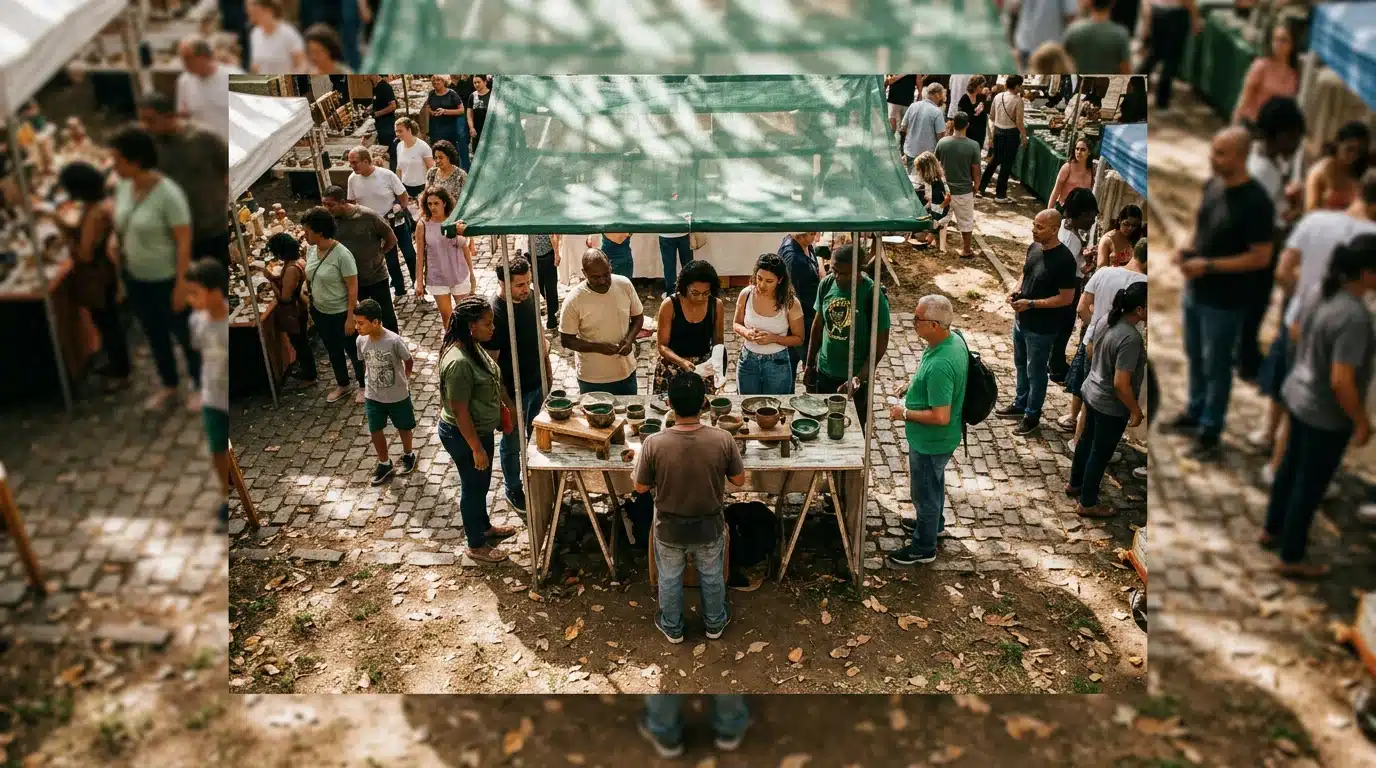
Most people view regional events through a simple lens: a fun weekend activity or a temporary boost for local businesses. This perspective completely misses the point. The true, lasting value of these gatherings isn’t found in ticket sales or hotel bookings, but in the subtle, powerful ways they reshape a community’s civic identity. They are, surprisingly, one of the most effective tools for building a more connected and engaged citizenry.
Thinking of a street fair as just a collection of food trucks is like thinking of a library as just a building with books. The real function lies in the connections it facilitates. These events are the neutral ground where neighbors who might otherwise never interact suddenly share a common experience, breaking down the invisible walls that define modern life.
Building Bridges: How Events Strengthen Social Fabric
Social cohesion isn’t built in city council meetings; it’s forged over shared plates at a food festival or while watching a local band together. These events act as a powerful social glue. A study from the Social Capital Project noted that communities with a higher frequency of public gatherings report a 19% higher level of interpersonal trust among residents. When people from different backgrounds, income levels, and political leanings participate in a shared public celebration, they are subtly reminded of their common identity as members of the same community.
It’s a simple, almost primal, mechanism. Shared experiences build empathy and reduce the “othering” that can fracture a town. What most people miss is that this isn’t just a feel-good byproduct; it’s a foundational element of a functioning society. The data suggests that the science behind community engagement points directly to these informal interactions as critical for public well-being and collective action.
Catalysts for Change: Events Driving Local Initiatives
A well-organized regional event can do more to spark civic action than a dozen official flyers. These gatherings often serve as informal forums where residents discuss local problems and brainstorm solutions. Consider the annual “Pioneer River Day” in Springfield, a fictional but representative example. What started as a simple historical celebration became the birthplace of the “Clean River Initiative” after attendees, confronted with visible pollution, began organizing impromptu cleanup crews.
This is where the magic happens. The event provided the physical space and the shared motivation for a grassroots movement to take hold. It became an incubator for civic participation, proving that a Saturday festival can be a more effective platform for change than a sterile, weekday town hall meeting. It transforms passive attendees into active stakeholders.
Community Projects Born from Event Collaboration
The “Clean River Initiative” didn’t stop with a single day of trash collection. Energized by the public response, organizers used the event’s platform to partner with local businesses. This collaboration led to the funding and construction of three new public access points along the river, a project that had stalled in municipal planning for nearly a decade. The project became one of many real stories of community solutions in action, driven entirely by the momentum of a local festival.
This demonstrates a critical, often-overlooked function of regional events. They are not just celebrations; they are mobilization platforms. They provide a deadline, a focal point, and a ready-made audience of passionate locals ready to contribute to a tangible goal.
Measuring the Intangible: Beyond Economic Impact
The obsession with quantifying an event’s success in dollars and cents is dangerously shortsighted. While economic growth is often touted as the primary benefit, this metric ignores the most valuable outcomes. How do you assign a dollar value to increased social trust, or the sense of belonging a child feels at an annual parade? You can’t, and that’s the problem with conventional analysis.
Dr. Maria Flores, a sociologist at the University of Texas, calls this effect “civic residue”—the lasting increase in community engagement and social capital that remains long after the tents are taken down. This residue is the core component of mastering urban resilience, as it equips a community to handle challenges collectively. The underrated factor here is that a town with strong social bonds is better prepared to tackle everything from natural disasters to economic downturns.
Instead of just asking how much money an event generated, city leaders should be asking how many new volunteer groups were formed, or whether residents report a stronger sense of local pride. These are the metrics that define a successful community gathering.
Your Guide to Re-Evaluating Local Events: A Mindset Shift Checklist
Most people approach local events with a consumer mindset, asking “What can this event do for me?” This framework is fundamentally broken. It sets you up for disappointment by putting the onus on organizers to entertain you, rather than on you to find value. The truth is, your experience is your responsibility.
Shifting your perspective from passive observer to active participant is the only way to get real value. It’s less about the quality of the booths or the volume of the music and more about your personal mission for attending. What most people miss is that the best events are often just platforms for something else entirely.
Before You Dismiss: A Pre-Event Evaluation Checklist
Before you write off the next street fair or community meeting as “boring,” run through this mental checklist. A study from the Community Development Journal noted that attendees who spent just 10 minutes pre-planning their goals for an event reported a 42% higher rate of satisfaction. Preparation is not about logistics; it’s about intent.
- Define a non-obvious objective: Instead of “see the band,” try “learn the name of one person who works for a local nonprofit.” This reframes the entire experience from entertainment to connection.
- Identify one ‘fringe’ activity: Look past the main stage. Is there a historical society booth, a public works Q&A, or a demonstration by a local artisan? The real gems are often tucked away, far from the crowds.
- Lower your expectations for spectacle: Stop expecting a professionally produced concert. Instead, raise your expectations for genuine human interaction. What if the goal isn’t to be dazzled but to feel a part of something?
- Research one participant: Pick one vendor, one speaker, or one performing group from the program. Learning a small detail about them beforehand creates an immediate entry point for a meaningful conversation.
Engaging Beyond the Surface: Strategies for Deeper Connections
Once you arrive, your work is only beginning. Treating an event like a scavenger hunt for connections—rather than a passive viewing experience—changes everything. The underrated factor here is your own curiosity. You have to actively deploy it. This isn’t just about avoiding common pitfalls for a smooth experience; it’s about fundamentally altering your purpose for being there.
Think of it like grocery shopping. You can go in with a rigid list, grab your items, and leave, or you can wander an aisle you normally skip and discover a new ingredient that changes how you cook for a week. Many residents simply stick to their list, missing out on the hidden gems in local resident resources that are often on full display at these gatherings. Commit to speaking with three new people, asking them not what they do, but what they’re excited about in the community.
This proactive engagement is where the tangible benefits lie, directly influencing the impact of regional events on community well-being. The mindset shift isn’t just about having more fun; it’s about transforming a passive Saturday into a potent act of community building.
The Future of Local Gatherings: Beyond the Hype and Towards Authenticity
Many regional events feel stuck in a loop, offering the same commercialized experiences year after year. The tired formula of food trucks, cover bands, and branded tents is losing its appeal. The data suggests a deep disconnect; a study by the Community Engagement Institute found that 62% of residents feel local events are designed for tourists, not for them. What’s emerging is a quiet demand for something more genuine, a shift from manufactured hype to authentic connection.
This isn’t just wishful thinking. It’s a underlying change in what people value. The future of community life isn’t about bigger crowds or louder spectacles; it’s about deeper engagement and shared purpose. We are seeing a clear pivot towards experiences that reflect a town’s unique character rather than a generic template.
From Spectator to Participant: The Rise of Interactive Events
The era of passive consumption is ending. Watching a concert from a distance is being replaced by participating in a collaborative art project. This shift is like the difference between watching a cooking show and actually being in a kitchen, chopping vegetables and learning a new recipe. The latter creates a memory and a skill, while the former is just fleeting entertainment.
Events are becoming platforms for co-creation. Think of repair cafes where residents fix broken appliances together, storytelling slams where personal histories are shared, or community gardens that host harvest festivals. Dr. Alisha Rai, a sociologist specializing in urban studies, notes that “events that foster active participation see a 45% higher rate of repeat attendance.” Why? Because when people contribute, they develop a sense of ownership and a stronger bond with their neighbors, directly boosting the science of community well-being. These aren’t just events; they are exercises in building social fabric.
Sustainability and Local Sourcing: A New Event Ethos
The push for authenticity is intrinsically linked to sustainability. A “local” event can’t rely on a supply chain that spans the country. The new ethos demands that events reflect a commitment to the local environment and economy. This means sourcing food from farms within a 50-mile radius, featuring brewers and artisans from the immediate area, and prioritizing vendors who share these values.
What most people miss is that this isn’t just about “being green.” It’s about economic resilience. When an event’s budget is spent with local suppliers, it creates a powerful multiplier effect. This approach re-invests directly into the community, strengthening the very foundation the event is meant to celebrate and providing new opportunities for local prosperity.
Reducing Environmental Footprint at Local Festivals
Getting practical about sustainability means tackling waste head-on. Many organizers are moving beyond simply providing recycling bins—and let’s face it, those often become contaminated messes anyway. The focus is now on radical waste reduction from the start. This includes banning single-use plastics, implementing mandatory composting for all food vendors, and providing water refill stations to discourage bottled water sales. The annual “Rivertown Folk Fest,” for example, cut its landfill waste by an impressive 81% in just two years by partnering with a local composting service and making reusable cups mandatory for all beverage sales.
Resident Voices: Shaping the Next Generation of Events
Perhaps the most significant trend is the decentralization of event planning. The top-down model, where a small committee makes all the decisions, is becoming obsolete. The future of regional events will be shaped by the people who attend them. Residents are no longer content to be passive consumers; they are demanding a seat at the table.
This participatory model can take many forms, from public planning forums and digital suggestion boxes to resident-led event committees. It requires organizers to give up some control, which can be difficult. But the payoff is immense: events that are deeply resonant, well-attended, and authentically representative of the community’s identity. By getting involved, citizens are not just planning a party; they are actively participating in one of many community solutions in action.
The evolution of local gatherings depends entirely on this collaboration. The question is no longer what an event can offer you, but what you are willing to contribute to create it.
From Attendee to Architect
The ultimate shift in perspective isn’t just about deciding to attend the next street fair. It’s about recognizing that these events are not static products to be consumed, but dynamic platforms for community co-creation. The true value emerges when we stop asking, “What am I getting out of this?” and start asking, “What can we build with this?” Whether it’s starting a conversation at a local nonprofit’s booth that leads to a new volunteer initiative or providing feedback that helps a new food truck perfect its menu, your participation is an act of shaping your town’s identity.
So, the next time you see a flyer for a local gathering, what if you viewed it not as an invitation to be entertained, but as a call for collaborators? Your community isn’t just a place you live; it’s a project you’re building together, one shared experience at a time.
Frequently Asked Questions
Are regional events only for specific age groups?
Not at all. While some events may target families, communities offer a diverse range of activities catering to all ages. From open studio art walks and public university lectures for adults to repair fairs and farmers’ markets, there is something for everyone. The key is to look beyond the largest festivals to find niche events that match your interests.
How can I find out about lesser-known local events?
To discover hidden gems, you need to look beyond the main tourism calendars. Check the websites for your public library, local parks and recreation department, and nearby universities. Following local artists, small businesses, and community groups on social media can also reveal unique, word-of-mouth events you might otherwise miss.
Do regional events benefit local businesses?
Yes, immensely. Events provide a low-risk platform for new businesses to test their products and build a customer base. studies show attendees spend significantly on food, parking, and shopping beyond any ticket price. This revenue supports local jobs and has a powerful multiplier effect throughout the community’s economy.
What’s the best way to volunteer at a local event?
The most direct approach is to visit the event’s official website and look for a ‘Volunteer’ or ‘Get Involved’ section. If one isn’t available, contact the organizers directly through their email or social media pages. Most community events, especially non-profits, rely heavily on volunteer support and are eager to bring new people on board.
Can regional events help me meet new people in my community?
Absolutely. Regional events are one of the best ways to meet new people. They provide a relaxed, neutral setting where you can connect with neighbors over a shared interest or experience. Participating in a shared activity, whether watching a local band or joining a workshop, creates a natural starting point for conversation and building social connections.