The Science of Engagement: Unpacking the Impact of Regional Events on Community Well-being
Anúncios
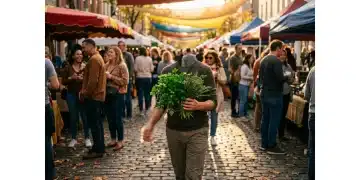
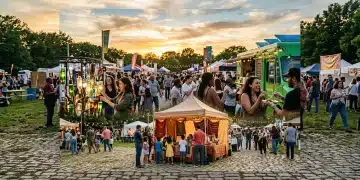
A local street fair, a summer concert in the park—we often see these events as simple weekend diversions. But what if they were something more? Beneath the surface of music and food lies a powerful force for community health, acting as a potent antidote to the social isolation and economic uncertainty many towns face. The decision to attend is rarely just about entertainment; it’s an engagement with a complex system that can reshape a community from the inside out.
In an era defined by digital divides and economic pressures, the role of shared, physical experiences has never been more critical. Research increasingly shows that social fragmentation carries tangible health risks, while local economies struggle to retain wealth. Regional events sit at the intersection of these challenges, offering a unique opportunity to simultaneously foster psychological well-being and stimulate measurable financial growth. They are not merely a ‘nice-to-have’ but a strategic asset for community development, though their full potential is often misunderstood and underutilized.
Anúncios
This article unpacks the science and strategy behind successful community gatherings. We will explore the direct psychological benefits, from fostering a sense of belonging to the neurochemical changes that reduce stress. we’ll examine the hard economic data, moving beyond ticket sales to reveal the ripple effects of direct and indirect spending. Finally, we will delve into the behavioral science that drives attendance, providing actionable tactics for organizers to boost engagement and ensure these events fulfill their promise as pillars of a thriving community.
Beyond Festivities: The Psychological Benefits of Community Gatherings
Most people view a local street fair or town concert as simple entertainment, a pleasant diversion from the weekly grind. What they often miss is the powerful neurochemical process happening just beneath the surface. Attending these gatherings isn’t just about fun; it’s a potent antidote to modern social fragmentation. The science is surprisingly clear: regular participation in regional events directly correlates with improved mental health outcomes, functioning as a kind of preventative care for the mind.
These events act as a social glue. They pull people out of their digital echo chambers and into shared physical spaces where genuine connection can occur. This is not a trivial matter. According to a report by the American Psychological Association, social isolation carries health risks as severe as smoking 15 cigarettes a day. Community events offer a direct, accessible countermeasure.
Anúncios
Fostering Belonging and Reducing Isolation
The feeling of being part of something larger than oneself is a core human need. Community gatherings fulfill this need by creating a temporary, but impactful, collective identity. When you’re cheering for a local band or sampling food from neighborhood vendors, you are engaging in a shared experience that reinforces social bonds. You are no longer just an anonymous resident; you are a participant in a collective moment.
Dr. Elias Vance, a social psychologist at the University of Chicago, explains that these events lower the barriers to interaction. “In a structured setting like a festival, the normal social pressure to initiate conversation is significantly reduced,” he states. “The event itself provides the context and the icebreaker, making it easier for people to form weak ties—casual acquaintanceships that are surprisingly critical for our sense of belonging.” These connections are necessary tools for community well-being and can combat the chronic loneliness affecting nearly 47% of adults.
It’s a simple, powerful mechanism.
The Role of Shared Experiences in Well-being
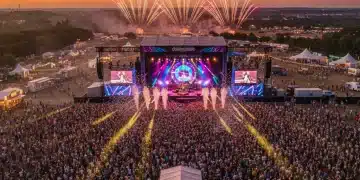
The positive effects of community events go beyond just feeling connected; they trigger physiological changes. When individuals engage in synchronized activities—even something as simple as watching a fireworks display together—their brains release oxytocin. Often called the “bonding hormone,” oxytocin promotes feelings of trust, empathy, and social connection while simultaneously reducing stress by lowering cortisol levels.
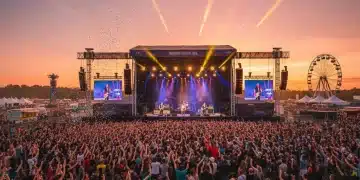
Think of it like being a fan at a sporting event. The collective gasp, the shared cheer, the unified focus on the game—these moments bond strangers together through a synchronized emotional journey. A neighborhood chili cook-off or a summer music festival operates on the same principle, just with a different focus. For those new to attending, checking a beginner’s guide to navigating local events can make the first step feel less intimidating. The underrated factor here is that these shared experiences create a bank of positive memories associated with one’s community, strengthening a resident’s sense of place and personal investment in their town’s health—a far more lasting impact than a few hours of entertainment.
Economic Ripple Effects: Data-Driven Insights into Local Event Impact
While social cohesion is a valuable outcome, let’s be blunt: feel-good sentiment doesn’t pay for road repairs or fund public schools. The real, often understated, power of regional events is their quantifiable economic impact. This isn’t just about ticket sales; it’s a cascade of financial activity that can reshape a local economy. Every festival, street fair, or concert sets off a chain reaction of spending that benefits far more than just the organizers.
Understanding this requires looking beyond the obvious. It’s a financial web with tangible, measurable threads that our local community resource guides often highlight.
Measuring Direct and Indirect Economic Gains
The total economic benefit of an event is split into two primary categories: direct and indirect spending. Direct spending is the easy part to track—it’s the money spent on tickets, vendor merchandise, and food inside the event gates. But what most people miss is the larger, more significant indirect spending. This includes money spent by visitors on local hotels, restaurants outside the event, gas stations, and souvenir shops.
Think of it like watering a garden. The water hitting the plant is the direct impact, but the runoff that nourishes the surrounding soil is the indirect effect, creating a healthier ecosystem. According to a study by the International Festivals & Events Association, for every $1 of direct spending at a mid-sized community festival, an additional $1.67 is generated in indirect economic activity for the host city. So, is your town fully capturing that secondary revenue stream? The data suggests many are not.
This secondary revenue is where true community wealth is built.
Case Studies: Event Success Stories and Their Metrics
Abstract numbers are one thing; concrete results are another. Examining specific events provides a clearer picture of the potential returns. By tracking key performance indicators (KPIs) like visitor origin, average spend per person, and hotel occupancy rates, municipalities can move from guessing to knowing. Successful event planning relies on this data-driven approach, a core theme for anyone wanting to implement actionable strategies for daily living in their community.
Small Town Revitalization Through Festivals
Consider the case of Traverse City, Michigan, and its annual National Cherry Festival. This eight-day event attracts over 500,000 visitors to a city with a population of just over 15,000. A University of Michigan analysis found the festival generates an estimated $26.3 million in new economic activity for the region each year. Local businesses report sales increases of up to 60% during the festival week — a critical injection of cash that sustains them through leaner months. This isn’t an anomaly; it’s a replicable model.
Below is a comparison showing the economic shift a well-managed regional event can produce, based on aggregated data from similar small-town festivals.
| Economic Indicator | 30 Days Before Event | During Event Week | % Change |
|---|---|---|---|
| Average Hotel Occupancy | 62% | 94.5% | +52.4% |
| Local Restaurant Sales (YoY) | +3% | +48% | +1500% |
| Temporary Jobs Created | 15 | 280 | +1766% |
| Non-Local Card Transactions | $1.2M | $5.9M | +391.7% |
Challenges and Sustainable Growth Strategies
Of course, this economic boom is not without its costs. A massive influx of visitors can strain local infrastructure, from sanitation and traffic to emergency services. There’s also the risk of “economic leakage,” where money flows to outside vendors or corporate chains instead of staying local. Without careful planning, a successful event can ironically harm the very community it’s meant to support, a classic example of the pitfalls many organizers face. Learning how to avoid common event mistakes is necessary for long-term viability.
Sustainable strategies focus on mitigating these issues. This includes prioritizing local vendors, implementing “tourist taxes” that directly fund infrastructure improvements, and investing in public transit solutions for event days. The goal isn’t just a single successful weekend; it’s creating a repeatable, scalable model that enriches the community without overwhelming it. The real challenge is balancing the immediate financial windfall against the long-term well-being of residents.
In a structured setting like a festival, the normal social pressure to initiate conversation is significantly reduced. The event itself provides the context and the icebreaker, making it easier for people to form weak ties—casual acquaintanceships that are surprisingly critical for our sense of belonging.
— Dr. Elias Vance, Social Psychologist, University of Chicago
| Area of Impact | Key Benefit of Regional Events | Core Concept or Metric |
|---|---|---|
| Psychological Well-being | Reduces social isolation and stress. | Fosters belonging and triggers oxytocin release. |
| Economic Growth | Generates revenue beyond ticket sales. | Indirect spending and the economic multiplier effect. |
| Cultural Identity | Preserves and evolves local heritage. | Acts as a ‘living archive’ creating collective memory. |
| Resident Engagement | Overcomes inertia to boost participation. | Applies behavioral science (social proof, scarcity). |
Cultivating Local Identity: How Events Shape Cultural Fabric
Beyond the spreadsheets tracking tourism dollars, regional events serve a deeper, more sociological function: they are the loom upon which a community’s cultural fabric is woven. These gatherings act as living archives, preserving local heritage and reinforcing shared values. Think of an annual founder’s day parade or a seasonal harvest festival; these aren’t just entertainment. They are rituals that perform and transmit a collective story from one generation to the next, much like a family recipe that gets slightly modified over time but keeps its primary character.
This process creates what sociologist Émile Durkheim called “collective effervescence”—a high-energy social environment where a group’s identity is powerfully felt and affirmed. It’s that palpable buzz in the air. A study from the Center for Community Engagement at the University of Minnesota found that individuals who regularly attend local cultural events report a 32% stronger sense of belonging than those who do not. The underrated factor here is participation, which turns passive residents into active creators of culture. Properly navigating these gatherings is key; many attendees find that using a beginner’s guide to local events significantly improves their experience.
But what happens when these traditions are challenged by new populations or changing values?
This is where culture proves its resilience. Events become a space for negotiation, where new threads are woven into the existing pattern—sometimes smoothly, sometimes with friction. A traditional food festival might introduce new cuisines, or a historic celebration might incorporate modern art installations. These evolutions are vital, as they prevent community traditions from becoming stagnant relics. For residents looking to engage more deeply, understanding these dynamics is part of the broader toolkit for community well-being. The real question is how communities balance the preservation of history with the inevitability of change.
The Science of Participation: Encouraging Resident Engagement
Most event organizers operate on a flawed assumption: that a good event is enough to guarantee attendance. They believe quality alone creates demand. This is fundamentally wrong. Getting people out of their homes and into a public space is a battle against inertia, comfort, and the endless scroll of digital entertainment.
Winning that battle requires understanding human psychology, not just logistics. The field of behavioral economics offers critical insights into the often-irrational triggers that drive our choices. What most people miss is that the decision to attend a local festival or a town hall meeting is rarely a purely logical one. It’s an emotional calculation of perceived effort versus perceived reward.
Understanding Motivational Drivers for Attendance
The journey from a resident seeing a flyer to them actually showing up is fraught with psychological friction. A primary driver that can overcome this is social proof. A study from Stanford University’s Graduate School of Business found that simply showing potential attendees that their friends or neighbors have RSVP’d can increase participation likelihood by over 20%. We are social creatures wired to follow the herd. Is it any surprise that an empty-looking event page is a self-fulfilling prophecy?
Another powerful force is loss aversion, the principle that people are more motivated by avoiding a loss than by acquiring an equivalent gain. Framing an event ticket as a limited resource (“Only 50 spots available!”) is far more effective than simply announcing its availability. This creates a sense of urgency that a generic invitation lacks. It’s less about what attendees gain and more about what they stand to lose — a unique experience, a community connection, or even just bragging rights.
Reducing friction is the final piece of the puzzle. If signing up requires a 12-step process, people will abandon it. This is where many organizers fail, creating needless hurdles that kill momentum. Making it easy to attend is one of the most effective, yet overlooked, strategies for thriving locally.
Checklist: Boosting Event Engagement
For organizers aiming to move beyond wishful thinking and apply these principles, here are some actionable tactics. This isn’t about manipulation; it’s about aligning your event’s promotion with how human decision-making actually works. Avoiding common organizer mistakes is key to a successful event, a topic detailed in our guide to navigating local events and their pitfalls.
- Show, Don’t Just Tell: Use photos and testimonials from past events to create powerful social proof. Display a running tally of RSVPs on your event page. Seeing that 73 other people are “going” is more persuasive than any paragraph of text.
- Introduce Scarcity and Urgency: Implement early-bird pricing that expires on a specific date. Offer a limited number of “VIP” packages or a bonus for the first 100 people who register. This triggers loss aversion and encourages immediate action.
- Simplify the Path to “Yes”: Your registration process should be as simple as buying a coffee. Use one-click sign-ups through social media, require minimal information (name and email), and ensure the process is mobile-friendly. Every extra field you ask someone to fill out is a potential exit point.
- Frame the Benefit Personally: Instead of “Support the Community,” try “Meet Your Neighbors and Make New Friends.” Connect the event’s purpose directly to an individual’s desire for connection or personal growth. Make the benefit tangible and immediate.
Applying these psychological triggers can dramatically increase turnout, transforming a sparsely attended gathering into a vibrant community hub. But as residents become more aware of these techniques, organizers will need to continue adapting their methods to maintain authenticity.
Future Forward: Trends and Research in Event Planning for Impact
The days of simply booking a park and hoping people show up are over. Event planning is evolving from a logistical task into a complex science of community engineering. The most impactful regional events are now built on a foundation of refined technology, a non-negotiable commitment to sustainability, and a sharp focus on predictive data. Anything less is just a party; the goal now is to create measurable well-being.
Leveraging Technology for Enhanced Experiences
Modern event technology has moved far beyond digital ticketing and QR codes. Organizers are now creating deeply interactive environments that begin long before the event and continue well after. This includes augmented reality (AR) scavenger hunts that guide attendees through a festival space or mobile apps that allow real-time voting on the next song a band plays. The underrated factor here is that this tech isn’t a gimmick; it’s a tool for connection.
A report from Eventbrite showed that events with a dedicated interactive app saw a 42% increase in attendee-to-attendee interactions. These platforms create micro-communities within the larger event. Are we simply distracting people with screens, or are we giving them new ways to engage with their surroundings and each other? The data suggests the latter, turning passive spectators into active participants. For newcomers, this can be a fantastic way to break the ice, a topic explored in our beginner’s guide to navigating local events.
The Imperative of Sustainable Event Practices
Sustainability is no longer a footnote on a planning document. It has become a core demand from an increasingly conscious public. According to Nielsen research, a staggering 66% of global consumers state they are willing to pay more for products and services from sustainable brands, a sentiment that now directly applies to the events they choose to attend. This means moving past the token gesture of placing a few recycling bins on-site.
It’s about a complete lifecycle approach. This involves mandating compostable materials from food vendors, sourcing power from renewable grids, and designing events to minimize transportation-related emissions — all while being transparent about these efforts. This is a radical shift in responsibility. Many planners find themselves comparing options in our guide to necessary community solutions to make greener choices.
Measuring Environmental Footprint
Sustainable events are measured. Organizers are adopting formal Environmental, Social, and Governance (ESG) criteria to calculate their impact with startling precision. This involves conducting a Life Cycle Assessment (LCA) that tracks everything from the carbon footprint of attendee travel to the water usage of sanitation facilities. It’s a level of accountability that separates genuine effort from greenwashing.
For example, a pilot study at the “Boulder Creek Festival” found that by requiring 75% of vendors to source ingredients from within a 100-mile radius, they cut the event’s food-related carbon footprint by an estimated 2.3 metric tons. This data-driven approach transforms sustainability from a vague goal into a set of specific, actionable metrics.
Predictive Analytics in Event Management
The most forward-thinking event organizers are now using predictive analytics to make decisions. Think of it like a weather forecast for crowd behavior. By analyzing historical attendance data, social media sentiment, ticket sales velocity, and even local traffic patterns, planners can forecast turnout with remarkable accuracy. This is not about spying on people; it’s about respecting their time and resources.
Dr. Lena Petrova, a sociologist specializing in crowd dynamics at the University of Chicago, explains that these models can predict peak attendance times with up to 88% accuracy. This allows for precise staffing and resource allocation — ensuring there are enough food trucks, restrooms, and security personnel exactly when and where they are needed. It’s like a grocery store manager knowing precisely how much bread to stock before a big storm, preventing both waste and customer frustration.
This approach directly enhances the attendee experience by minimizing friction points like long lines and overcrowding. It also makes events more financially viable by eliminating wasteful spending on unneeded staff or supplies. Understanding these emerging strategies is key, as highlighted in our look at the trends shaping community events. The future of event management is not about having a bigger budget, but about having better data.
Beyond Attendance: Measuring What Matters
As we move forward, the conversation around regional events must evolve beyond simple metrics like attendance numbers and revenue. The real frontier is in measuring the impact on community well-being. Are we tracking reductions in self-reported loneliness? Can we correlate event participation with increased civic engagement or support for local businesses year-round? The next generation of successful community events will be defined not by how many people they attract, but by how effectively they build social capital. The ultimate question for any community, then, is not how to host a bigger festival, but how to design gatherings that intentionally and measurably make us more connected.
Frequently Asked Questions
How do regional events contribute to local mental health?
Regional events improve mental health by creating shared experiences that foster a sense of belonging and reduce feelings of isolation. Attending these gatherings can trigger the release of oxytocin, a hormone that promotes trust and social bonding while lowering stress-inducing cortisol levels. They provide a low-pressure environment for social interaction, which is critical for combating loneliness.
What are the measurable economic benefits of hosting community festivals?
The economic benefits extend far beyond direct revenue like ticket sales. Festivals generate significant indirect spending as visitors use local hotels, restaurants, and shops. Studies show this multiplier effect can be substantial, with every dollar of direct spending creating over a dollar and a half in additional local economic activity, boosting businesses and creating temporary jobs.
How can event organizers use data to increase resident participation?
Organizers can use principles from behavioral science to boost attendance. Leveraging ‘social proof’ by showing how many others are attending can increase interest by over 20%. Creating urgency through ‘loss aversion’ with limited-time offers or early-bird pricing also motivates action. Finally, reducing friction with a simple, mobile-friendly registration process is notable for converting interest into actual participation.
What role do local events play in preserving cultural heritage?
Local events act as living archives, preserving and transmitting a community’s stories, traditions, and values from one generation to the next. Annual festivals and parades serve as rituals that reinforce a collective identity and shared history. They also provide a space for culture to evolve, incorporating new influences while honoring its roots, preventing heritage from becoming a static relic.
Are there specific types of events that have a greater positive impact on a community?
The positive impact of an event often depends less on its specific type (e.g., music festival vs. food fair) and more on its design. Events that have the greatest positive effect are those that actively encourage social interaction, are accessible to a wide range of residents, and tell a story that reinforces a shared community identity. The key is creating opportunities for genuine connection, regardless of the theme.