Eco-Chic Living: Unveiling Modern Trends in Sustainable Home Organization
Anúncios
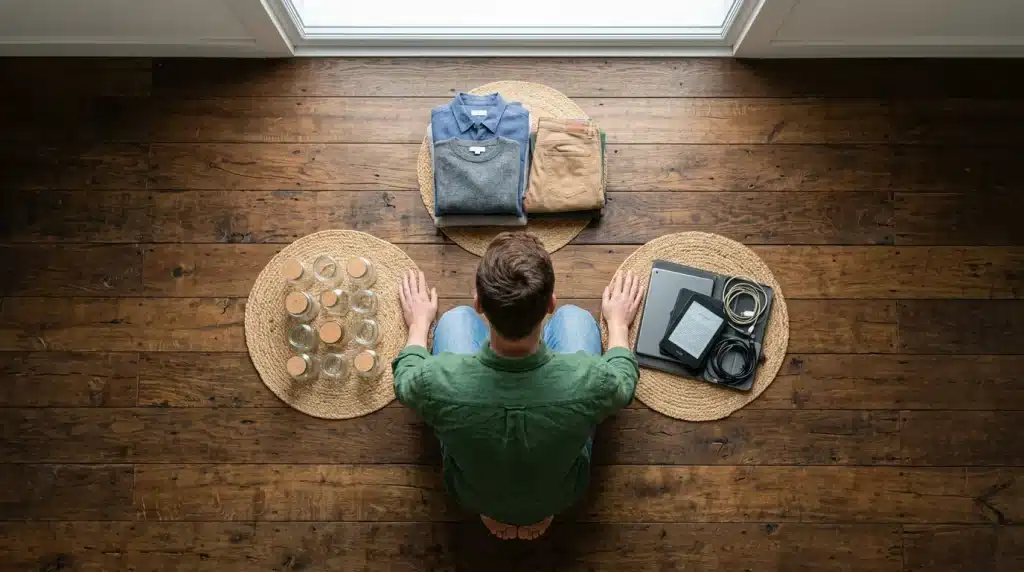
That feeling of being overwhelmed by clutter is universal, but the traditional solution—a frantic purge that fills countless trash bags—is becoming a relic of the past. What if the key to a organized home isn’t about buying more stylish containers, but about fundamentally changing your relationship with the things you own? This is the core of eco-chic living, a movement that merges style with sustainability.
Sustainable home organization is a mindset shift away from the linear ‘take-make-dispose’ culture that has defined consumerism for decades. It’s not about stark minimalism or depriving yourself of beautiful things. Instead, it’s about intentionality: thoughtfully acquiring items, extending their lifespan through care and repair, and ensuring they have a responsible next life when you’re done with them. This approach transforms a simple household chore into a powerful act of environmental stewardship.
Anúncios
This guide offers practical strategies to get you started. We’ll explore innovative and beautiful eco-friendly materials that rival their plastic counterparts, and break down how to apply circular economy principles like reduction, reuse, and repair within your own four walls. we’ll cover the digital tools that can streamline your sustainable journey and reveal how tapping into community resources can amplify your impact, creating a home that is not just tidy, but conscious.
The Evolving Landscape of Sustainable Decluttering
The days of filling countless trash bags with unwanted items are quickly becoming obsolete. Sustainable home organization isn’t just about tidying up; it’s a underlying shift in how we view our possessions and their lifecycle. This approach directly challenges the buy-and-discard culture that has defined consumer habits for decades. It demands a more conscious interaction with the things we own.
What most people miss is that this isn’t about deprivation, but intention. Instead of a massive, guilt-ridden purge, the focus is on mindful acquisition and responsible disposal. A recent report from the Global Sustainability Institute found that 68% of consumers under 35 now consider a product’s environmental impact before making a purchase. This evolving mindset transforms our homes from simple storage units into curated spaces that reflect personal values (and let’s be honest, require less cleaning).
Anúncios
This process is much like sorting groceries after a shopping trip. Some items are for immediate use, others are stored for later, and some can be shared. Sustainable decluttering asks you to find new homes for gently used items through local donation centers or even learn to repair them at free community workshops. The goal is to divert as much as possible from the landfill.
Ultimately, this shift redefines what it means to be organized. It’s not just about having less, but about valuing more, turning a simple household chore into a powerful statement on consumption and community responsibility.
Innovative Materials and Products for a Greener Home
Choosing the right materials for your organization products is more than just an aesthetic decision; it’s an environmental statement. The market is finally moving beyond flimsy plastic bins and embracing a new generation of eco-friendly storage solutions. This shift redefines what it means to be organized, linking tidiness directly to sustainability. It’s a powerful change.
Comparing Sustainable vs. Traditional Storage Options
The classic debate often pits traditional plastics against greener alternatives like bamboo. While a set of plastic containers might be cheap and readily available, their environmental toll is immense. A study from the Center for International Environmental Law revealed that plastic production and incineration could add more than 850 million metric tons of greenhouse gases to the atmosphere annually. They are cheap for a reason. In contrast, materials like bamboo, cork, and recycled fabrics present a compelling case. Bamboo, a fast-growing grass, requires minimal water and no pesticides, making it a highly renewable resource. Its durability rivals traditional hardwoods, though it can sometimes come with a slightly higher price tag. What most people miss is the full lifecycle cost. An initial investment in a quality bamboo or recycled metal product often means avoiding the need for frequent replacements, which is a core tenet of mastering urban resilience. Think of it like stocking your pantry: you can buy cheap, processed ingredients that work for now, or you can invest in quality whole foods that provide better long-term results. The same logic applies to your storage. Are you looking for a temporary fix or a lasting solution?
Emerging Brands and Their Eco-Conscious Offerings
A growing number of companies are making it easier to choose sustainably without sacrificing style. Brands are now creating everything from sleek desktop organizers made of recycled paper composites to beautiful baskets woven from seagrass or water hyacinth. These natural materials bring a unique texture and warmth to a space—a far cry from sterile plastic bins. This move toward natural aesthetics in the home mirrors the growing interest in cultivating green spaces even in urban environments. Some companies are taking it a step further by using post-consumer waste. You can now find felt storage cubes made entirely from recycled plastic bottles and modular shelving units crafted from reclaimed wood. These products not only divert waste from landfills but also close the loop on consumption. The availability of these items is part of a larger movement, reflecting the future trends in community living toward circular economies. Finding these products is becoming simpler, with many local shops and online retailers prioritizing eco-conscious inventories.
The ultimate goal of sustainable organization isn’t an empty room; it’s a full life with less waste. It’s about curating purpose, not just possessions.
— Anya Sharma, Founder of The Circular Home Project
| Principle | Key Action |
|---|---|
| Reduce First | Implement a ‘one-in, one-out’ rule and a 30-day waiting period for non-essential purchases to curb impulse buying. |
| Creative Reuse & Upcycling | Before discarding, find new purposes for items. Glass jars can become spice containers; an old ladder can be a bookshelf. |
| Embrace Repair | Learn basic skills to fix clothing, furniture, and electronics, extending their lifespan and defying disposable culture. |
| Choose Materials Wisely | Opt for storage solutions made from sustainable materials like bamboo, cork, reclaimed wood, or recycled fabrics. |
| Go Digital & Smart | Digitize documents to eliminate paper clutter and use smart home tech to reduce energy and food waste automatically. |
| Engage Your Community | Utilize local tool libraries, repair cafes, and sharing groups to borrow instead of buy and to donate usable items. |
Adopting Circular Economy Principles in Your Home
Most people think sustainable living stops at the recycling bin. That’s a dangerously incomplete picture. The real change comes from embracing a circular economy within your own four walls, a system designed to eliminate waste and keep materials in use. It’s a underlying shift from the linear “take-make-dispose” model that has filled our homes with clutter and our landfills with regret.
This isn’t about perfection; it’s about intentionality. Adopting this mindset treats your home not as a final destination for products, but as a temporary hub where items are used, cared for, and then sent on to their next life.
Reducing Consumption: The First Step to a Sustainable Space
Before you buy another bamboo organizer, stop. The most impactful principle of a circular economy is the one most often ignored: reduction. You simply cannot organize your way out of overconsumption. The Environmental Protection Agency data suggests the average American produces about 4.9 pounds of municipal solid waste per day. What most people miss is that a significant portion of this originates from household consumption of goods and packaging.
True sustainability starts with buying less. Implement a strict “one-in, one-out” policy for items like clothing or books. Before making a non-primary purchase, wait 30 days. You might find the urge passes completely, saving you money and future clutter. Resisting the impulse is the real organizational hack.
Creative Reuse and Upcycling for Unique Storage
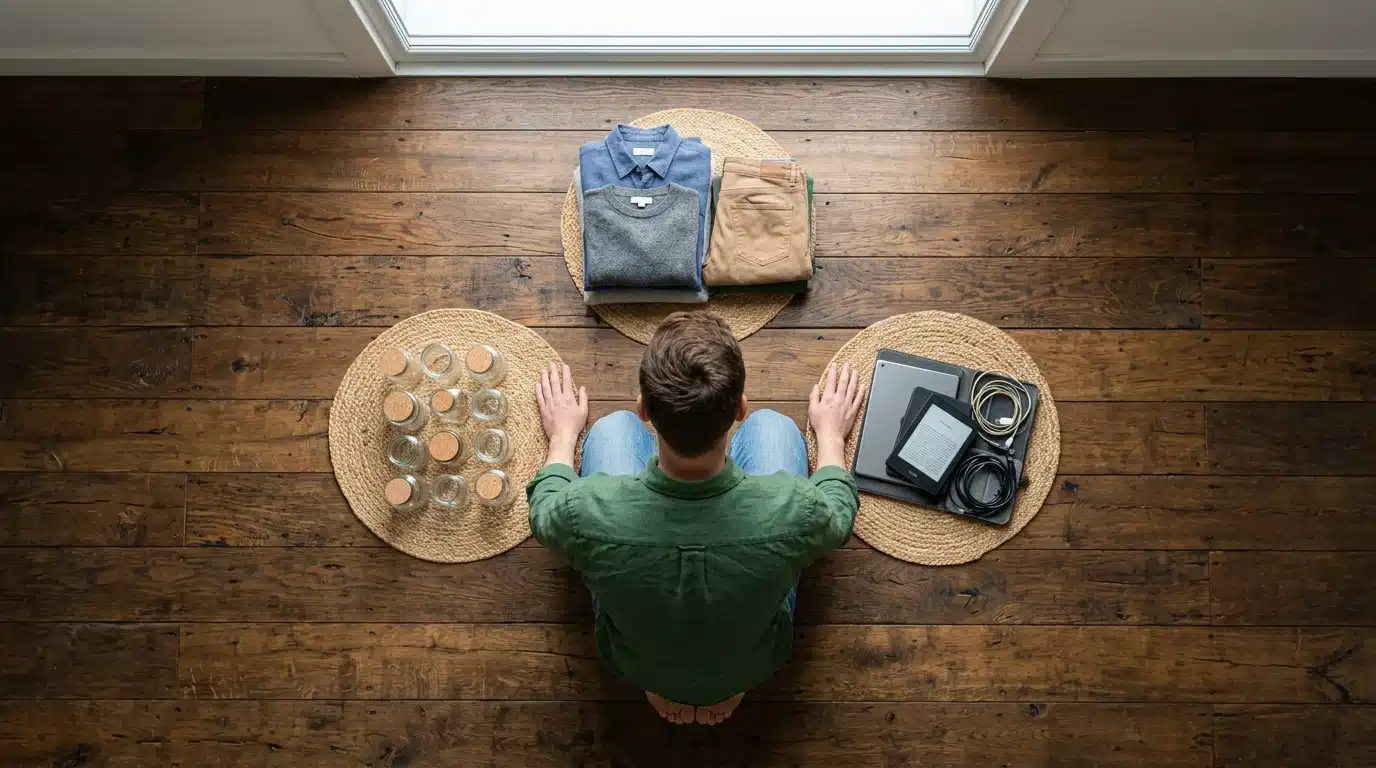
Thinking about what you can reuse is like a chef looking at leftovers—it’s an opportunity for creativity, not a sign of scarcity. Before discarding an item, ask what else it could be. Glass pasta sauce jars become excellent containers for bulk spices or grains. An old wooden ladder, when mounted horizontally, transforms into a rustic and functional bookshelf. This is the core of upcycling.
This approach moves beyond simple utility into creating a home with character. Why buy a generic plastic bin when you can use vintage suitcases for out-of-season blanket storage? It’s a direct rebellion against mass-produced homogeneity. Of course, not every project is a masterpiece—we’ve all seen the Pinterest attempts gone wrong—but the effort itself re-wires your brain to see potential instead of trash.
Repair and Repurpose: Extending the Life of Your Belongings
Our society has developed an allergy to maintenance. At the first sign of a tear, a wobble, or a flicker, our instinct is to replace. When did a loose handle become a death sentence for an entire dresser? Embracing repair is a powerful act of defiance against this disposable culture. Learning to sew a button, patch a hole, or tighten a screw extends the life of your belongings significantly.
Repurposing is repair’s practical cousin. That t-shirt with a stain that just won’t come out? It can be cut into cleaning rags. A chipped ceramic mug can become a planter for a small succulent. This isn’t about making everything last forever, but about extracting every bit of value from an object before it is finally retired.
Local Resources for Repair and Donation
You don’t have to become a master craftsperson overnight. Many communities have resources to help you on this journey. “Repair cafes” are becoming more common, where volunteers help you fix everything from toasters to sweaters. Learning these skills is often more accessible than people think, with many organizations providing free community workshops on basic home and clothing repair.
Tool libraries allow you to borrow items you may only need once, reducing the need to purchase and store them. For items that are beyond your ability to repair or repurpose, donation is the next best step. Your city almost certainly has a network of thrift stores and charities, and it’s just a matter of uncovering these hidden local resources. Giving an item a second chance in someone else’s home is a critical link in the circular chain.
Digital Tools and Smart Solutions for Eco-Conscious Living
Many people assume that a sustainable lifestyle means rejecting technology. The surprising truth is that your smartphone and home Wi-Fi can be powerful allies in reducing your environmental footprint. Moving beyond the physical act of sorting and upcycling, digital organization offers a streamlined path to efficiency. It automates the small decisions that collectively lead to significant waste reduction.
This isn’t about trading paper clutter for digital clutter. It’s about a basic shift in how you manage your home’s resources. Think of it less like a new filing system and more like upgrading your home’s entire operating system for sustainability.
Embracing Paperless: Digitalizing Documents and Media
The mountain of mail, receipts, and manuals in the average home is staggering. Going paperless is one of the most immediate sustainable home organization tips you can implement. Using a simple scanner app on your phone, you can digitize important documents and shred the originals, instantly freeing up space and saving trees. A study from the Paperless Project indicates that the average office worker uses 10,000 sheets of paper per year; household consumption can be similarly high.
Cloud storage services allow you to create a central, accessible hub for everything from tax records to your kids’ artwork. But what about the energy consumption of data centers? It’s a valid concern, yet the data suggests the impact of producing and transporting paper—not to mention dealing with its eventual waste—is far greater. This transition also declutters your media, replacing shelves of DVDs and CDs with digital libraries. For those unsure where to start, many local libraries offer free community workshops on basic digital literacy.
Smart Home Tech for Waste Reduction and Efficiency
Smart home technology has moved far beyond a simple convenience. When applied correctly, these devices become active participants in managing your home’s energy use and reducing waste. Energy-efficient home systems like smart thermostats learn your schedule, adjusting heating and cooling to prevent waste while you’re away. The U.S. Department of Energy reports that a properly programmed smart thermostat can save around 10% annually on energy bills.
Smart plugs are another underrated tool, allowing you to cut “vampire power” drawn by electronics on standby. These small changes work like a self-sorting laundry hamper—they handle the tedious background tasks automatically. This level of control is a key component for anyone interested in mastering urban resilience on a personal scale. Your smart home can even help with food waste, with smart refrigerators that track expiration dates and suggest recipes for ingredients about to spoil.
Here are a few necessary tools to get started:
- Document Scanner App: Digitize receipts, mail, and important papers instantly.
- Cloud Storage Service: Create a secure, centralized digital filing cabinet.
- Smart Thermostat: Automate your home’s heating and cooling for peak efficiency.
- Digital Inventory App: Track pantry items to reduce food waste and avoid duplicate purchases.
Integrating these tools doesn’t just organize your home; it rewires your consumption habits from the ground up, pointing toward new future trends in community living where resource management is both personal and automated.
Community-Driven Sustainability: Sharing and Local Resources
Let’s be blunt: your perfectly organized, eco-friendly home is a beautiful but isolated island. True sustainable living doesn’t happen in a vacuum; it’s a team sport. The latest trend isn’t a new bamboo container, but the radical idea of looking beyond your own four walls and plugging into the community sharing economy. This is where individual actions gain real momentum.
The rise of hyper-local platforms for borrowing tools, sharing bulk food orders, and even swapping clothes is changing the game. Think of it less like owning a drill you use twice a year and more like having access to an entire workshop. Why let items gather dust when a neighbor could use them? A recent report from the National Center for Community Initiatives found that active participation in sharing programs can reduce a household’s consumer waste by an average of 18%. Many of these initiatives even host free repair workshops, teaching valuable skills that fight back against planned obsolescence.
This shift makes your neighborhood the ultimate organizational tool.
Beyond digital platforms, traditional resources are getting a modern update. Donation centers are now specializing, ensuring your items find the right home, and the growth of sustainable urban gardening co-ops provides access to fresh food without the packaging waste. What most people miss is how these spaces build social fabric—they are hubs of connection, not just drop-off points. Finding them is simpler than ever, often requiring just a quick search on your local municipality’s website or a community social media group.
Ultimately, engaging with these local systems transforms sustainable organization from a personal chore into a collective achievement. The real challenge is not just decluttering your home, but breaking the habit of hyper-individualism and embracing the shared resources that define the future of community living.
Crafting Your Sustainable Organization Blueprint
Most guides on sustainable living offer gentle suggestions and cheerful checklists. Let’s be clear: that approach isn’t working. Creating a sustainable home isn’t about buying more bamboo cutlery; it’s a radical audit of your consumption habits and a commitment to a fundamentally different way of living. It requires a blueprint, not a shopping list. This process is less about aesthetics and more about honest self-interrogation.
The hard truth is that convenience has trained us to be wasteful. Building a sustainable plan means actively choosing the less convenient, more thoughtful path. It’s a deliberate rebellion against the throwaway culture we’ve all been conditioned to accept. This isn’t a weekend project. It’s a lifestyle overhaul.
Assessing Your Current Organization Habits
Before you can build anything new, you have to survey the land—and your land is probably filled with more waste than you think. For one week, conduct a ruthless “waste audit.” This means tracking everything you throw away, from food scraps and plastic packaging to old clothes and broken electronics. Don’t just glance at the trash can; document it. What are your biggest categories of waste?
The results can be shocking. A recent study from the Boston University School of Public Health found that the average American household discards approximately 32% of its food, a staggering figure that highlights a deep disconnect between purchasing and consumption. This isn’t about guilt. It’s about data. Your personal data is the foundation of your entire plan, revealing the specific habits that need to be dismantled and replaced.
Developing a Phased Implementation Strategy
Trying to go zero-waste overnight is like deciding to run a marathon tomorrow with no training. You will fail. A phased strategy, focusing on incremental changes, is the only way to ensure long-term adoption. Think of it as building muscle; you start with manageable weights and gradually increase the load.
Your strategy should be broken down into manageable phases:
- Phase 1 (The Low-Hanging Fruit): Target the easiest changes identified in your audit. This could be switching to reusable grocery bags, starting a simple compost for food scraps (which can be a first step towards sustainable urban gardening), or unsubscribing from junk mail. These small wins build momentum.
- Phase 2 (Habit Replacement): Focus on replacing single-use items with durable alternatives. This involves more investment, like swapping paper towels for cloth napkins or disposable razors for a safety razor. It requires consciously changing your purchasing routines.
- Phase 3 (Skill Acquisition): This is where true self-sufficiency begins. Learn basic mending to repair clothes, simple DIY repairs for household items, or how to properly store produce to extend its life. These skills directly combat the cycle of buying, breaking, and discarding.
Maintaining Sustainability: Tips for Long-Term Success
Initial enthusiasm is easy; consistency is the real challenge. The underrated factor here is integrating these new habits so deeply that they become automatic. Don’t treat sustainability as a separate chore. Instead, weave it into your existing routines. Place your reusable coffee cup with your keys and wallet so you don’t forget it. Keep a “mending basket” next to where you watch TV.
This commitment is a core component of personal fortitude. True sustainability contributes to mastering urban resilience by reducing your dependence on fragile supply chains and disposable goods. It’s about building a household that can adapt and thrive with fewer external inputs. The goal is to make the sustainable choice the default choice.
Overcoming Common Challenges in Eco-Organization
You will face setbacks. The allure of a cheap, convenient plastic gadget will be strong, or you’ll find yourself too tired to sort your recycling properly. Acknowledging these hurdles is key. One of the biggest obstacles is the feeling of isolation—that your small efforts don’t matter. They do.
Another major challenge is dealing with items that break. Our first instinct is to toss them, but what most people miss is the opportunity to learn. Instead of throwing out a wobbly chair or a toaster that won’t pop, seek out knowledge. Many communities offer free workshops on basic repair and maintenance. Learning to fix what you own is perhaps the most powerful act of sustainable living you can perform, directly challenging the planned obsolescence that drives so much consumer waste.
Beyond the Bins: Organization as a Living System
Ultimately, the journey toward a sustainably organized home doesn’t end with a perfectly labeled pantry or a color-coded closet. Viewing your home not as a static showroom but as a dynamic hub for resources forces a more profound change. The real goal is to create a living system that intelligently manages the flow of goods, energy, and waste, adapting over time and interacting with the community around it.
As you continue to refine your space, the focus will naturally shift from what you can get rid of to what you can keep in circulation—whether through repair, sharing, or creative reuse. The ultimate question then becomes: what if the most organized home isn’t the one with the least stuff, but the one where nothing goes to waste?
Frequently Asked Questions
What are the benefits of sustainable home organization?
Sustainable organization reduces your environmental footprint by diverting waste from landfills and conserving resources. It also saves you money over time by discouraging unnecessary purchases and promoting repair over replacement, leading to a more intentional and clutter-free living space.
How can I start organizing my home sustainably on a budget?
Starting on a budget is easy because the first principle is to reduce consumption, which costs nothing. You can also reuse items you already own, like glass jars for pantry storage or old shoeboxes as drawer dividers. Shopping secondhand at thrift stores is another excellent way to find affordable and unique organization solutions.
What are some common eco-friendly materials for storage?
Look for products made from highly renewable or recycled materials. Common options include bamboo, cork, reclaimed wood, and natural fibers like seagrass, water hyacinth, and jute. You can also find durable storage bins and containers made from recycled plastics or fabrics.
Where can I donate items that are still usable?
Local thrift stores, community shelters, and religious organizations are great places to donate a wide range of household goods and clothing. For specific items, look for specialized programs such as Dress for Success for professional attire, or check with local libraries and schools for book donations.
Are there apps to help with sustainable home management?
Yes, many apps can help. Document scanner apps reduce paper clutter, while pantry inventory apps help track food to minimize waste. Neighborhood sharing apps like those for Buy Nothing groups facilitate borrowing and gifting items, reducing the need to buy new.
How does sustainable organization contribute to the circular economy?
It directly applies circular economy principles at a household level. By prioritizing repair, reuse, and responsible recycling or donation, you extend the life of products and materials. This practice keeps items in use for as long as possible, breaking the linear ‘take-make-dispose’ model and minimizing landfill waste.