Sustainable Business Practices: A 2026 Implementation Guide

Anúncios
In an era defined by increasing environmental awareness and stringent regulatory demands, embracing sustainable business practices is no longer just an ethical choice but a strategic imperative. Businesses worldwide are recognizing the profound impact their operations have on the planet and society, leading to a global shift towards more responsible and resilient models. This comprehensive guide outlines the four essential steps for organizations aiming to implement robust sustainable business practices by June 2026, setting a clear roadmap for eco-conscious enterprises.
The journey towards sustainability is multifaceted, encompassing environmental stewardship, social equity, and economic viability. It demands a holistic approach that integrates sustainability into every facet of an organization, from supply chain management and product design to operational efficiency and employee engagement. By prioritizing sustainability, businesses can not only mitigate risks and reduce costs but also unlock new opportunities for innovation, enhance brand reputation, attract top talent, and foster stronger relationships with stakeholders.
Anúncios
The urgency to act is underscored by the accelerating pace of climate change, resource depletion, and social inequalities. Consumers are increasingly demanding environmentally friendly products and services, while investors are scrutinizing companies’ ESG (Environmental, Social, and Governance) performance. Governments are also introducing stricter regulations and incentives to promote sustainable development. Therefore, integrating sustainable business practices is crucial for long-term success and competitiveness in the modern economic landscape.
This article will delve into four pivotal steps: conducting a comprehensive sustainability audit, developing a strategic sustainability plan, implementing actionable initiatives, and monitoring and reporting progress. Each step is designed to provide actionable insights and practical guidance, enabling businesses of all sizes and sectors to embark on or accelerate their sustainability journey effectively. Our target date, June 2026, provides a tangible deadline, encouraging proactive and decisive action.
Anúncios
Step 1: Conduct a Comprehensive Sustainability Audit
The foundational step in implementing sustainable business practices is to understand your current environmental and social footprint. A comprehensive sustainability audit serves as a diagnostic tool, identifying areas of high impact, inefficiencies, and opportunities for improvement. This initial assessment is critical for setting realistic goals and developing an effective strategy.
Defining the Scope of Your Audit
Before diving into data collection, clearly define the scope of your audit. Will it cover your entire organization, specific departments, or particular product lines? Consider the following aspects:
- Environmental Footprint: This includes energy consumption (electricity, gas, fuel), water usage, waste generation (solid waste, hazardous waste, wastewater), greenhouse gas (GHG) emissions, and raw material usage.
- Social Impact: Assess labor practices (fair wages, working conditions, diversity and inclusion), community engagement, human rights in the supply chain, and employee well-being.
- Governance: Evaluate corporate ethics, transparency, anti-corruption policies, and stakeholder engagement mechanisms.
- Supply Chain: Analyze the sustainability performance of your suppliers, including their environmental and social policies.
Gathering Data and Information
Data collection is a crucial phase. This involves gathering both quantitative and qualitative data from various sources:
- Utility Bills: Collect historical data on electricity, gas, and water consumption.
- Waste Management Records: Obtain data on waste volumes, types, and disposal methods.
- Purchase Records: Analyze records for raw materials, chemicals, and other inputs to understand their origin and environmental impact.
- Employee Surveys and Interviews: Gather insights into working conditions, employee satisfaction, and perceptions of sustainability within the company.
- Supplier Assessments: Request sustainability reports, certifications, or conduct surveys with your key suppliers.
- Operational Data: Review production processes, logistics, and transportation data to identify energy and resource inefficiencies.
Tools such as GHG accounting software, environmental management systems (EMS), and sustainability reporting frameworks (e.g., GRI, SASB) can significantly streamline this process. Engaging external consultants with expertise in sustainability audits can also provide an objective perspective and ensure thoroughness.
Identifying Hotspots and Opportunities
Once the data is collected, analyze it to identify the most significant environmental and social impacts, often referred to as ‘hotspots.’ These are the areas where your business has the greatest negative impact and, consequently, the greatest potential for improvement. For instance, a manufacturing company might find that energy consumption in its production facilities is a major hotspot, while a retail business might identify packaging waste as its primary concern.
Simultaneously, look for opportunities. These could include:
- Energy Efficiency: Upgrading to LED lighting, optimizing HVAC systems, or investing in renewable energy sources.
- Waste Reduction: Implementing recycling programs, composting, or redesigning products for circularity.
- Water Conservation: Installing low-flow fixtures, rainwater harvesting, or process water recycling.
- Supply Chain Optimization: Sourcing from eco-friendly suppliers, reducing transportation emissions, or promoting fair labor practices.
- Product Innovation: Developing eco-friendly products or services, extending product lifecycles, or offering repair services.
The audit should culminate in a detailed report outlining your current sustainability performance, highlighting key findings, and providing a foundation for developing your sustainability strategy. This step is crucial for establishing a baseline against which future progress can be measured, ensuring that your efforts to implement sustainable business practices are data-driven and impactful.
Step 2: Develop a Strategic Sustainability Plan
With a comprehensive understanding of your current sustainability performance, the next step is to translate these insights into a clear, actionable strategic plan. This plan will serve as your roadmap for integrating sustainable business practices across your organization, guiding decisions and resource allocation towards your sustainability goals.
Setting SMART Goals and Objectives
Effective sustainability planning begins with setting Specific, Measurable, Achievable, Relevant, and Time-bound (SMART) goals. These goals should address the hotspots identified in your audit and align with your overall business objectives. For example:
- Specific: Reduce Scope 1 and 2 GHG emissions by 30%.
- Measurable: Track emissions data annually using a recognized standard.
- Achievable: Invest in energy-efficient machinery and transition to renewable energy sources.
- Relevant: Align with global climate goals and stakeholder expectations.
- Time-bound: Achieve this reduction by December 2025.
Similarly, you might set goals for waste reduction (e.g., "Divert 75% of operational waste from landfills by June 2026"), water conservation (e.g., "Reduce water consumption by 20% by 2024"), or supply chain ethics (e.g., "Ensure 100% of tier-1 suppliers meet our ethical labor standards by 2025").
Identifying Key Performance Indicators (KPIs)
To measure progress towards your SMART goals, establish clear Key Performance Indicators (KPIs). KPIs are quantifiable metrics that allow you to track performance and demonstrate the impact of your sustainable business practices. Examples include:
- Environmental: kWh of energy consumed per unit of production, cubic meters of water used per employee, tons of waste generated per revenue, CO2e emissions per product.
- Social: Employee turnover rate, diversity metrics, hours of employee training on sustainability, number of community engagement initiatives.
- Economic: Cost savings from efficiency improvements, revenue from sustainable products, return on investment (ROI) from sustainability projects.
Regularly tracking these KPIs will provide valuable data for reporting and decision-making, ensuring accountability and continuous improvement.
Allocating Resources and Defining Roles
A sustainability plan is only as effective as its implementation, which requires adequate resources and clear responsibilities. This involves:
- Budget Allocation: Dedicate financial resources for sustainability projects, initiatives, and personnel.
- Team Formation: Establish a dedicated sustainability team or appoint sustainability champions within each department.
- Roles and Responsibilities: Clearly define who is responsible for what—from data collection and project management to communication and reporting.
- Training and Development: Invest in training employees on sustainability principles, practices, and their role in achieving the company’s goals.
Leadership commitment is paramount. Senior management must champion the sustainability agenda, integrating it into the company’s core values and strategic vision. This top-down commitment will foster a culture of sustainability throughout the organization and ensure that sustainable business practices are embedded at every level.
Stakeholder Engagement
Engaging stakeholders, including employees, customers, investors, suppliers, and local communities, is vital for the success of your sustainability plan. Their input can provide valuable perspectives, build consensus, and foster support for your initiatives. Consider:
- Internal Communication: Regularly communicate your sustainability goals, progress, and achievements to employees.
- Customer Feedback: Solicit feedback on your sustainable products and services.
- Investor Relations: Share your sustainability performance with investors to demonstrate long-term value creation.
- Supplier Collaboration: Work with suppliers to improve their sustainability performance.
- Community Partnerships: Collaborate with local organizations on environmental and social projects.
A well-communicated and inclusive sustainability plan will not only drive internal alignment but also enhance your brand reputation and build trust with external stakeholders. By June 2026, a robust plan should be fully integrated into your business operations, guiding your path to a more sustainable future.
Step 3: Implement Actionable Initiatives
With a strategic plan in place, the focus shifts to execution. This step involves putting your sustainable business practices into action through concrete projects and initiatives. The key is to prioritize actions that offer the greatest impact and align with your established goals, while also considering feasibility and cost-effectiveness.
Energy Efficiency and Renewable Energy Adoption
Reducing energy consumption and transitioning to renewable sources are often among the most impactful and financially rewarding sustainable initiatives. Consider:
- Energy Audits: Conduct detailed energy audits to identify specific areas for improvement.
- Lighting Upgrades: Replace traditional lighting with energy-efficient LED systems.
- HVAC Optimization: Upgrade to high-efficiency heating, ventilation, and air conditioning systems, and implement smart thermostats.
- Equipment Modernization: Invest in energy-efficient machinery and equipment.
- Renewable Energy: Install on-site solar panels or wind turbines, or purchase renewable energy credits (RECs) and power purchase agreements (PPAs) from off-site renewable energy projects.
- Behavioral Changes: Encourage employees to switch off lights and equipment when not in use.
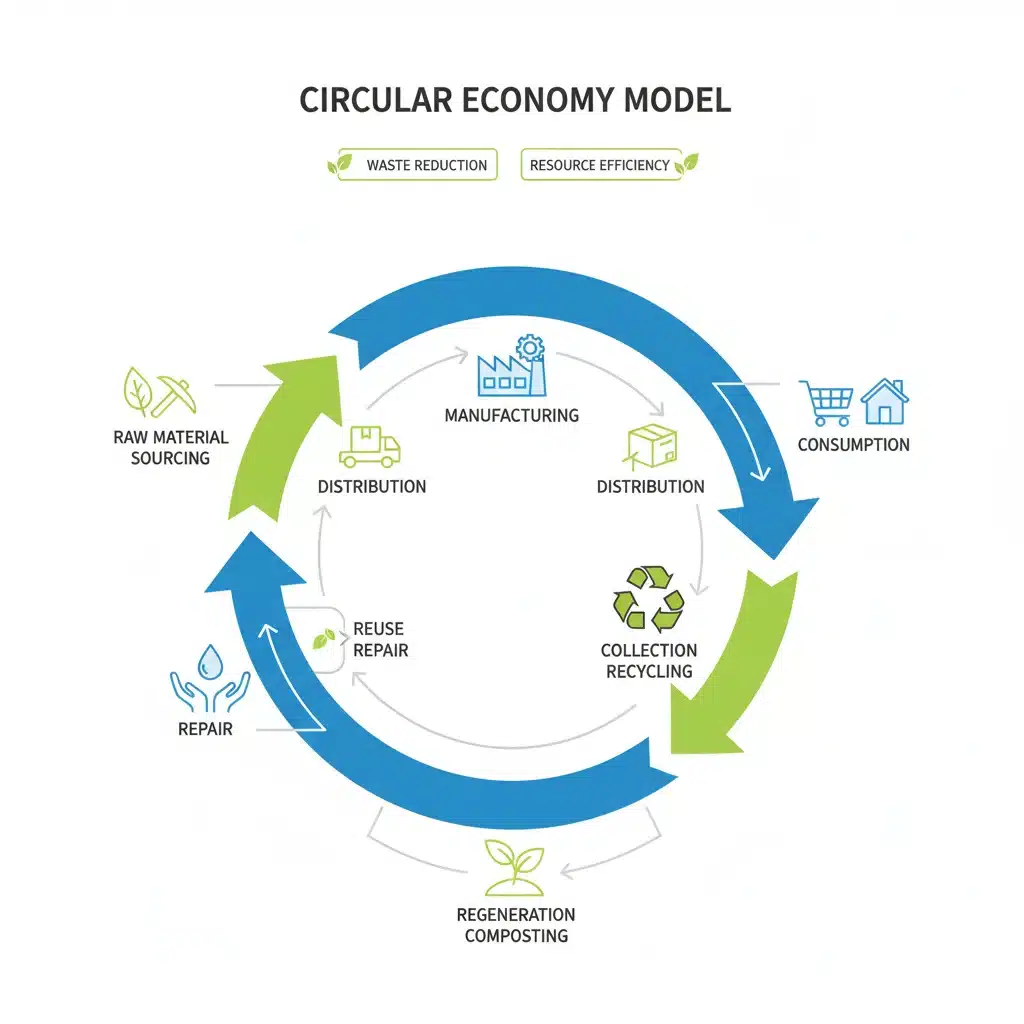
Waste Reduction and Circular Economy Principles
Minimizing waste generation and embracing circular economy principles are critical for resource efficiency. This means moving away from a linear "take-make-dispose" model towards one that keeps resources in use for as long as possible.
- Reduce, Reuse, Recycle: Implement comprehensive recycling programs, encourage the reuse of materials, and actively seek ways to reduce material consumption.
- Composting: Set up composting programs for organic waste.
- Product Design: Design products for longevity, repairability, and recyclability.
- Closed-Loop Systems: Explore opportunities to create closed-loop systems where waste from one process becomes a resource for another.
- Waste-to-Energy: Investigate waste-to-energy solutions for non-recyclable waste where appropriate.
- Responsible Sourcing: Prioritize suppliers who offer recycled, recyclable, or sustainably sourced materials.
Water Stewardship
Water scarcity is a growing global concern, making responsible water management an essential component of sustainable business practices.
- Water Audits: Identify areas of high water consumption.
- Leak Detection and Repair: Regularly inspect and repair leaks in plumbing and equipment.
- Efficient Fixtures: Install low-flow toilets, faucets, and showerheads.
- Process Optimization: Implement water-saving technologies in industrial processes, such as closed-loop cooling systems.
- Rainwater Harvesting: Collect and store rainwater for non-potable uses like irrigation or toilet flushing.
- Wastewater Treatment and Reuse: Treat and reuse wastewater where feasible.
Sustainable Supply Chain Management
Your supply chain can have a significant environmental and social footprint. Implementing sustainable practices requires engaging with your suppliers and ensuring their operations align with your values.
- Supplier Code of Conduct: Establish clear ethical and environmental standards for suppliers.
- Supplier Audits: Conduct regular audits to verify compliance with your code of conduct.
- Preferred Supplier Programs: Prioritize suppliers with strong sustainability performance and certifications.
- Local Sourcing: Source materials and products locally to reduce transportation emissions and support local economies.
- Logistics Optimization: Optimize transportation routes and modes to reduce fuel consumption and emissions.
- Traceability: Implement systems to track the origin and journey of your raw materials and products.
Employee Engagement and Social Responsibility
A successful sustainability program relies heavily on the engagement of your employees and a strong commitment to social responsibility.
- Training and Awareness: Educate employees on sustainability goals and practices.
- Incentive Programs: Reward employees for sustainable behaviors and ideas.
- Volunteer Programs: Organize corporate social responsibility (CSR) initiatives, such as community clean-ups or environmental education programs.
- Diversity, Equity, and Inclusion (DEI): Foster an inclusive workplace that values diversity and promotes equitable opportunities.
- Health and Safety: Ensure a safe and healthy working environment for all employees.
- Fair Labor Practices: Uphold fair wages, reasonable working hours, and respect for human rights across all operations.
By systematically implementing these actionable initiatives, businesses can make tangible progress towards their sustainability goals. The journey is continuous, and each successful implementation builds momentum, reinforcing the commitment to sustainable business practices by June 2026 and beyond.
Step 4: Monitor, Report, and Continuously Improve
The final, yet ongoing, step in implementing sustainable business practices is to establish robust mechanisms for monitoring progress, transparently reporting performance, and fostering a culture of continuous improvement. This ensures accountability, builds credibility, and allows for adaptation and refinement of your sustainability strategy over time.
Establishing Monitoring Systems
Effective monitoring is crucial for tracking your KPIs and assessing the impact of your initiatives. This involves:
- Data Collection Systems: Implement systems to regularly collect and consolidate data related to your environmental, social, and governance (ESG) performance. This could include energy meters, water meters, waste tracking software, and HR systems for social metrics.
- Performance Tracking: Use dashboards and reporting tools to visualize your progress against your SMART goals and KPIs.
- Internal Audits: Conduct regular internal audits to verify data accuracy and compliance with your sustainability policies and procedures.
- Technology Integration: Leverage sustainability management software or enterprise resource planning (ERP) systems to streamline data collection, analysis, and reporting.
Consistent and accurate data collection is the backbone of effective sustainability management. It allows you to identify trends, pinpoint areas needing further attention, and demonstrate the tangible benefits of your sustainable business practices.
Transparent Reporting and Communication
Reporting on your sustainability performance is essential for building trust with stakeholders and demonstrating your commitment to responsible business. Transparency is key, even when reporting on challenges or areas for improvement.
- Sustainability Reports: Publish annual sustainability reports (also known as ESG reports) that detail your goals, performance, challenges, and future commitments. Utilize recognized frameworks such as the Global Reporting Initiative (GRI) Standards, Sustainability Accounting Standards Board (SASB) Standards, or the Task Force on Climate-related Financial Disclosures (TCFD).
- Website and Digital Platforms: Dedicate a section of your website to sustainability, sharing your reports, policies, and ongoing initiatives. Use social media to communicate key achievements and engage with your audience.
- Investor Relations: Integrate ESG performance into investor presentations and financial disclosures to attract responsible investors.
- Certifications and Labels: Pursue relevant certifications (e.g., B Corp, ISO 14001, LEED for buildings) that validate your sustainability claims and provide external assurance.
Transparent reporting not only satisfies stakeholder demands but also reinforces your brand as a leader in sustainable business practices, enhancing your reputation and competitive advantage.
Continuous Improvement and Adaptation
Sustainability is not a static destination but a dynamic journey of continuous learning and improvement. The world is constantly evolving, with new scientific discoveries, technological advancements, and regulatory changes emerging regularly. Therefore, your sustainability strategy must be flexible and adaptable.
- Regular Review and Evaluation: Periodically review your sustainability plan and performance against your goals. Assess what worked well, what didn’t, and why.
- Stakeholder Feedback: Actively solicit feedback from all stakeholders—employees, customers, suppliers, and community members—to identify areas for improvement and new opportunities.
- Benchmarking: Compare your performance against industry best practices and leading sustainability companies to identify gaps and set higher aspirations.
- Innovation and R&D: Invest in research and development to discover new sustainable materials, processes, and technologies. Encourage internal innovation and provide platforms for employees to suggest green initiatives.
- Scenario Planning: Conduct scenario planning to anticipate future environmental and social risks and opportunities, ensuring your strategy remains resilient and forward-looking.
- Policy Advocacy: Engage in policy advocacy to support the development of regulations and incentives that promote sustainable development.

By embedding a culture of continuous improvement, your organization can consistently enhance its sustainable business practices, stay ahead of evolving demands, and maintain its leadership in responsible business. This iterative process ensures that your commitment to sustainability remains robust and relevant, driving long-term value for your business and the planet.
The Path Forward: Achieving Sustainability by June 2026
The journey to integrate comprehensive sustainable business practices by June 2026 is ambitious yet entirely achievable with dedication and a structured approach. The four essential steps outlined—conducting a comprehensive audit, developing a strategic plan, implementing actionable initiatives, and monitoring and reporting progress—provide a robust framework for any eco-conscious business to transform its operations.
Embracing sustainability offers a multitude of benefits that extend far beyond mere compliance. It drives innovation, enhances operational efficiency, reduces costs, strengthens brand reputation, and fosters deeper connections with customers and employees. In an increasingly interconnected and environmentally conscious world, businesses that prioritize sustainability are better positioned for long-term resilience, growth, and profitability.
The deadline of June 2026 serves as a powerful motivator, urging businesses to move beyond aspirational statements to concrete action. It encourages a proactive stance, allowing organizations to integrate sustainability into their core strategy rather than treating it as an afterthought. This means making sustainability an integral part of decision-making at every level, from product development and supply chain management to marketing and human resources.
Furthermore, the collective effort of businesses adopting sustainable business practices contributes significantly to addressing global challenges such as climate change, biodiversity loss, and social inequality. Each step taken, no matter how small, adds to a larger movement towards a more sustainable and equitable future for all.
To truly embed sustainability, businesses must also cultivate a culture of environmental and social responsibility. This involves engaging employees at all levels, providing continuous education, and celebrating successes. When every individual within an organization understands their role in achieving sustainability goals, the momentum for change becomes unstoppable.
As you embark on or continue your sustainability journey, remember that perfection is not the goal; continuous improvement is. There will be challenges, setbacks, and new learnings along the way. However, by adhering to a clear strategy, remaining adaptable, and fostering a genuine commitment to responsible practices, your business can not only meet the June 2026 target but also emerge as a leader in the sustainable economy.
The future belongs to businesses that understand and act upon their responsibility to the planet and its people. By committing to these essential steps, you are not just making a difference for your organization; you are contributing to a healthier, more prosperous world for generations to come. Start today, and let June 2026 be a milestone in your journey towards truly sustainable business practices.