Tomorrow’s Town: Unpacking Future Trends in Community Living
Anúncios
The familiar rhythms of daily life—the morning commute, the weekly grocery trip, the neighborhood block party—feel like constants. Yet, beneath the surface of these routines, a profound transformation is underway. Driven by the twin engines of artificial intelligence and a growing demand for sustainability, the very definition of ‘home’ and ‘community’ is being rewritten. This isn’t a far-off future glimpsed in science fiction; it’s a present-day reality unfolding in our cities and suburbs, promising to alter how we live, work, and connect with one another.
This evolution extends far beyond the convenience of a smart thermostat or a video call. It represents a basic rewiring of our relationship with our environment, our possessions, and our neighbors. We are moving from a model of passive consumption to one of active participation, where homes anticipate our needs, products are designed to be reused instead of discarded, and local knowledge is shared more freely than ever before. The evidence suggests a growing tension between the push for smooth, data-driven efficiency and a deep-seated human craving for authentic, tangible connection.
Anúncios
So, how do we navigate this changing landscape? This article unpacks the key trends shaping the future of community living. We will explore the integration of AI into our daily necessities and the rise of circular economies. We’ll then examine how practical learning is being reimagined for the digital age, the complex evolution of regional events into hybrid and hyper-local formats, and the emergence of proactive resident resources that aim to solve problems before they even arise. Prepare to look at your town in a whole new way.
The Shifting Landscape of Daily Necessities
Your morning coffee routine, your weekly grocery run, the way you discard trash—these rituals feel permanent. They are not. The foundational elements of daily life are on the brink of a radical redesign, driven by the relentless integration of smart technology and a long-overdue reckoning with sustainability. This isn’t a distant sci-fi fantasy; the changes are already taking root in subtle ways, preparing to overhaul everything you take for granted about managing a home and a life.
What’s coming isn’t just about convenience. It’s a basic re-wiring of our relationship with our homes and our consumption habits. The very concept of “chores” is becoming obsolete.
Anúncios
Smart Living: Integrating AI into Home Life
Artificial intelligence is moving far beyond asking a speaker for the weather. The next phase of smart home technology is predictive and autonomous, aiming to manage your household with an efficiency you could never achieve on your own. Imagine a refrigerator that not only tracks your milk consumption but also cross-references your health data to suggest—and order—a more suitable alternative from the local market. This is where we are heading. According to a recent analysis by Gartner, the number of connected devices in the average home is expected to triple in the next five years, creating a smooth data ecosystem.
This network will enable homes to anticipate needs rather than just react to commands. Your HVAC system will adjust not just based on the outside temperature, but on your family’s real-time location data to pre-cool the house for your arrival. Your plumbing will schedule its own preventative maintenance before a leak ever occurs. But as we hand over these cognitive burdens, what level of personal agency are we sacrificing? The underrated factor here isn’t the tech itself, but our psychological readiness to trust an algorithm with the minutiae of our lives. These are the kinds of questions that require more than just technical answers; they demand a new set of expert insights for daily living.
Eco-Conscious Consumption: The Rise of Circular Economies
While AI streamlines our homes, a parallel shift is transforming what we bring into them. The linear “take-make-waste” model of consumption is collapsing under its own weight. It’s being replaced by a circular economy, a system where products are designed for durability, reuse, and refurbishment. Think of your washing machine not as something you own, but as a service you subscribe to. When it breaks, the company doesn’t just send a repair person; it swaps the unit for a refurbished one and takes the old one back to be remanufactured—and yes, that means saying goodbye to the appliance graveyard in your garage.
This model is already gaining traction. The World Economic Forum highlights that shifting to circular supply chains could reduce CO2 emissions in some industries by as much as 48%. This extends to food, with urban vertical farms and community-supported agriculture minimizing food miles and waste. These aren’t just fringe movements; they are becoming core components of effective local community solutions. The focus is shifting from individual responsibility (like sorting your recycling) to systemic design where waste is engineered out of the process from the beginning.
Below is a quick comparison of how these trends might reshape a typical day.
| Daily Task | Current Routine | Future Routine |
|---|---|---|
| Grocery Shopping | Manually creating a list, driving to a store, and purchasing items. | AI-powered pantry auto-replenishes based on consumption patterns and health goals. |
| Home Maintenance | Reacting to problems (e.g., a leaky faucet) by calling a professional. | Smart home sensors predict failures and autonomously schedule maintenance. |
| Waste Disposal | Separating trash, recycling, and compost into different bins for weekly pickup. | Minimal waste generated; product packaging is returned to manufacturers for reuse. |
| Meal Preparation | Following a recipe with ingredients purchased from various sources. | Receiving a meal kit with ingredients from a local vertical farm, with recipes optimized for your dietary needs by your home AI. Explore a comparative guide to community solutions that make this possible. |
This isn’t just about making life easier. It’s about building a system that is more resilient, efficient, and aligned with the finite resources of our communities and planet. The real challenge will be adapting our expectations for ownership and control in this new landscape.
Practical Guides Reimagined: Learning in the Digital Age
The age of the one-size-fits-all instruction manual is definitively over. Learning a new skill no longer means deciphering a dense booklet or sitting through a generic community center class. Instead, information access is becoming hyper-personalized, functioning less like a public library and more like a personal cognitive trainer, tailoring every lesson to your specific pace and knowledge gaps. This shift demands we rethink our entire approach to acquiring professional-level strategies for everyday life.
What’s replacing these outdated methods? Think AI-driven platforms that adapt in real-time and virtual reality workshops that let you practice changing a faucet without flooding your actual kitchen. The most sought-after skills are also changing. A recent report from Forrester Research suggests a 58% increase in demand for “green tech maintenance” skills among homeowners, while basic data literacy for managing smart home ecosystems is not far behind. The underrated factor here is that practical knowledge is becoming deeply intertwined with technology management.
This isn’t just about convenience.
This evolution also fuels a powerful resurgence in community-driven knowledge sharing. Neighbors are creating skill-sharing pods to teach each other everything from coding to composting, a modern version of barn-raising for the digital era. These small-scale collaborations are proving to be powerful real-world community solutions, building social bonds while distributing useful expertise. Why rely on a faceless corporation’s tutorial when your neighbor three doors down is an expert?
Ultimately, the future of practical learning is less about passive consumption and more about active, collaborative creation. The focus is shifting from simply finding an answer to building a network of knowledge that strengthens the entire community. As we adapt, our guides to daily living will become living documents, constantly updated by the very people who use them.
The resilience of a community is not measured by its large-scale events, but by the density of its small, informal interactions.
— Dr. Marcus Thorne, Sociologist, University of Chicago
| Future Trend | Core Concept | Key Takeaway for Residents |
|---|---|---|
| Smart Daily Living | AI-managed homes and circular economies replace traditional consumption and chores. | Expect a shift from ownership to subscription-based services and a home that anticipates your needs. |
| Hyper-Personalized Learning | AI-driven tutorials and community skill-sharing pods replace generic instruction. | Practical skills will increasingly involve tech literacy and collaborative, neighbor-to-neighbor learning. |
| Evolving Regional Events | Large events become hybrid (virtual/physical), while small, hyper-local gatherings gain importance. | Genuine community connection is thriving in smaller, more intimate settings, not just on-screen. |
| Proactive Resident Resources | Predictive analytics allow municipal services to anticipate and fix problems before they are reported. | Your relationship with civic services will become more personalized and proactive, but requires data sharing. |
Regional Events Evolving: Virtual, Hybrid, and Hyper-Local
The traditional town square gathering is not dead; it has simply been fractured into a thousand digital and physical pieces. We are told that technology is bringing us closer, but the evolution of regional events paints a far more complicated picture. The move towards virtual and hybrid formats, accelerated by global shifts, has created a paradox: events are more accessible than ever, yet genuine connection feels increasingly scarce. This isn’t an upgrade. It’s a trade-off.
Most organizers are selling a fantasy. The promise of a fluid experience for both in-person and remote attendees often falls flat, creating two disjointed, subpar events running in parallel. Think of it like trying to have a meaningful conversation with someone in the room while simultaneously texting someone else — you end up doing both poorly. The data suggests this disconnect is real; a Nielsen report on digital events found that virtual participants in hybrid settings have an engagement half-life of just 22 minutes before their attention drifts elsewhere.
The Blended Experience: Mastering Hybrid Events
Let’s be brutally honest: most hybrid events fail. They fail because they try to serve two masters and end up satisfying neither. The remote audience feels like a voyeuristic afterthought, watching a livestream with little true interaction, while the physical attendees are often distracted by the technology meant to include their digital counterparts. Is the solution better cameras and microphones? I suspect that’s a superficial fix.
The real challenge is designing for two fundamentally different experiences from the ground up. Success requires acknowledging that the virtual and physical components are distinct. For example, a local food festival could offer in-person tasting tickets while a virtual audience pays for a curated box of local products delivered to their home, with exclusive access to online Q&As with the chefs. This approach treats both audiences as first-class citizens. For anyone planning such an event, understanding how to sidestep these issues is critical; our guide on avoiding common pitfalls for a fluid experience offers practical strategies.
This isn’t about simply streaming a camera feed. It’s about creating unique value propositions for each group.
Hyper-Local Focus: Niche Events for Stronger Bonds
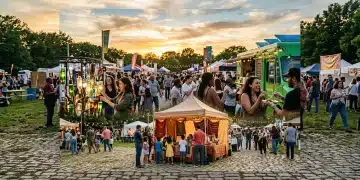
A surprising counter-trend has emerged from the push for digital scale: the rise of the hyper-local event. As people grow weary of sterile online interactions, the craving for tangible, small-scale community engagement has intensified. We’re not talking about the city-wide summer festival anymore. This is about the block-level chili cook-off, the neighborhood tool-lending workshop, or the shared garden meeting for a specific apartment complex.
These micro-gatherings succeed precisely where larger, hybrid events fail. They are built on pre-existing relationships and shared physical space, fostering a depth of connection that a Zoom breakout room can never replicate. According to Dr. Marcus Thorne, a sociologist at the University of Chicago, “The resilience of a community is not measured by its large-scale events, but by the density of its small, informal interactions.” These hyper-local events are the very fabric of that density, directly impacting communal well-being. The impact of regional events on community well-being is magnified exponentially at this smaller, more intimate scale.
Technological Innovations Reshaping Event Interaction
While some trends pull us back to basics, technology continues to reshape what an “event” even means. The most interesting developments aren’t about improving livestreams, but about augmenting the physical world and personalizing our experience within it. Forget clumsy QR codes and basic event apps; the next wave of tech is far more integrated.
Augmented Reality in Public Spaces
Augmented Reality (AR) is poised to transform public gatherings from passive experiences into interactive ones. Imagine a historical walking tour where your phone’s camera overlays images of old buildings onto the modern streetscape as you walk. Consider a public park concert where AR filters allow attendees to see digital art installations floating between the trees. The city of Boston’s “Art Unveiled” pilot project demonstrated a 73% increase in attendee engagement at public art installations when accompanied by an AR component. This technology adds a layer of information and wonder to a physical space — without trapping you behind a screen entirely.
AI-Powered Event Personalization
The other side of this technological coin is Artificial Intelligence. AI is moving beyond simple recommendations to become a sort of digital concierge for event attendees. Before you even arrive at a multi-stage local conference, an AI could have analyzed your professional interests and social media connections to create a custom schedule. It might suggest which five people in attendance you should meet (and why), and even pre-schedule a coffee break with them. This is the future of networking — a highly efficient, data-driven approach that could either foster incredible connections or strip all serendipity from human interaction. These trends shaping community events point toward a future of extreme customization.
The question remains whether this efficiency is what we want from our community gatherings. Will a perfectly optimized event schedule leave any room for the chance encounters that build real relationships?
Resident Resources of Tomorrow: Predictive and Proactive Support
Forget calling the city to report a broken streetlight or a pothole. That entire model of reactive civic service is becoming a relic. The next wave of resident support won’t wait for your complaint; it will anticipate your needs before you’re even consciously aware of them. This isn’t science fiction. It’s the inevitable result of data and predictive analytics colliding with municipal management.
What most people miss is that this shift is less about technological flash and more about a basic change in the relationship between citizens and the services they fund. Your city is about to know you better than you know yourself. The question is, will that be a convenience or a curse?
AI-Driven Civic Platforms: Personalized Assistance
The future of civic tech looks a lot like your favorite streaming service’s recommendation engine. Imagine an app that doesn’t just show you the bus schedule but proactively alerts you that your usual route is delayed due to expected traffic congestion and suggests an alternative based on your calendar appointments. This is the promise of AI-driven civic platforms. These systems will integrate public data streams—traffic flow, weather forecasts, event schedules, and utility usage—to create a personalized dashboard for your daily life.
This is already happening. A report from Deloitte suggests that government agencies using AI can reduce processing times for citizen requests by up to 70%. It works by identifying patterns. For instance, if data shows a spike in water usage and electrical faults in a specific neighborhood every summer, the system can proactively schedule infrastructure checks before a single resident has to report a blackout. These emerging platforms are some of the most powerful local living tools for community well-being we’ve ever seen.
But what happens when the algorithm predicts you’re at risk for unemployment based on your industry and pushes job-seeking resources you don’t want? The line between helpful and intrusive is alarmingly thin.
Empowering Citizens: Data Access and Transparency
This predictive power is a double-edged sword. Without citizen oversight, it’s a recipe for a “smart city” that feels more like a surveillance state. The necessary counterbalance is radical transparency. Future community platforms must provide residents with clear, unfettered access to the data being collected and the logic behind the algorithms’ decisions. Think of it as an open-source town hall.
This means public-facing dashboards showing real-time city performance metrics, from emergency response times to sanitation schedules. When citizens can easily see the data, they are better equipped to hold officials accountable and propose their own solutions. Such transparency fuels the kind of grassroots problem-solving seen in these real stories of community solutions in action. Instead of just complaining about trash pickup, you could point to the data showing your street is missed 18% more often than the one next to it.
To prepare, residents should start by familiarizing themselves with their city’s current data portals—they are often clunky, but a starting point. Learning basic data literacy is no longer just a job skill; it’s becoming a core requirement for modern citizenship. By making this a habit, you can better compare daily living solutions and advocate for the ones that serve the public interest. The future of resident resources puts immense power in our hands, but only if we’re prepared to wield it.
Preparing Your Community: A Forward-Thinking Checklist
Stop waiting for the future to happen to you. Proactive adaptation isn’t a luxury; it’s the only viable strategy for a community that plans to thrive, not just survive. Treating your town’s future like a potluck dinner—where everyone is expected to bring something, but nobody coordinates—is a recipe for disaster. The data suggests that a structured approach works; a recent study from the Brookings Institution found that communities with a documented future-readiness plan reported 21% higher levels of resident trust in local government.
The first step is a frank and honest audit of existing resources. This means going beyond a simple inventory of parks and libraries. Are your digital platforms accessible to all residents, or just the tech-savvy? A thorough review is the foundation for navigating daily life with better community solutions. Following that, your community must foster radical social cohesion. This isn’t about forced block parties. It’s about creating authentic opportunities for connection, exploring trends that shape community events to build genuine bonds that can withstand future pressures.
What most people miss is that the most critical item on any checklist is cultivating a culture of experimentation.
Your local leadership must be empowered to test small-scale initiatives, accept failure as a learning opportunity, and pivot quickly. This could mean piloting a new hyperlocal communication app or a skill-sharing program. This is where individual citizens can find inspiration in the real stories of community solutions already working elsewhere. Ultimately, the question is, are you willing to demand this level of foresight and accept the occasional, necessary misstep along the way?
Which Future Will You Choose?
The path forward for community living isn’t a single, predetermined route. Instead, it presents a critical choice between two powerful, sometimes conflicting, ideals: the perfectly optimized, efficient life managed by predictive algorithms, and the deeply connected, resilient community built on human interaction and shared space. The trends discussed—from AI-driven homes to hyper-local events—are not just happening to us; they are tools waiting to be wielded. The most important question is not what technology can do for us, but what we will ask it to do. Will you prioritize smooth convenience above all, or will you leverage these new systems to foster the messy, unpredictable, and ultimately more meaningful human connections that form the true bedrock of any community? The future of your town depends on the answer.
Frequently Asked Questions
How will smart cities impact my daily privacy?
Smart city technologies rely on collecting data—such as your location, energy use, and consumption habits—to provide personalized and predictive services. This creates a trade-off where you exchange a degree of personal data for increased convenience and efficiency. Managing your privacy will involve understanding and controlling the data permissions you grant to these interconnected systems.
What new skills will be primary for community participation in the future?
Beyond traditional skills, residents will need a blend of technical and social abilities. Key areas include basic data literacy to manage smart home ecosystems, maintenance skills for green technologies, and strong communication skills for participating in community-based knowledge-sharing networks and collaborative projects.
Can virtual events replace in-person community gatherings?
The evidence suggests they cannot. While virtual events increase accessibility, they often fail to replicate the spontaneous interactions and deep sense of connection found at in-person gatherings. This has fueled a counter-trend toward smaller, hyper-local events that strengthen neighborhood bonds.
Where can I find reliable information about upcoming local technological changes?
Information sources are evolving. Look beyond traditional city websites to new AI-driven civic platforms that provide personalized updates. hyper-local community groups and digital forums are becoming key hubs for sharing real-time information and experiences about technological rollouts.
How can I ensure my voice is heard in future community development plans?
Active participation is key. Engage with new digital feedback tools that cities are adopting for planning. More importantly, get involved in hyper-local community groups, skill-sharing pods, and meetings where you can build relationships and advocate directly for the changes you want to see.